
Are Lithium Batteries Dangerous? The Honest Answer

By Jason Rieck
Co-Founder & Lead Designer, Cat Cruisers
If lithium batteries make you nervous, you're not being silly. You've probably seen footage of a burnt-out unit or an e-scooter in flames. And if you're thinking about a boat you'll also sleep on, it's a fair question. So we looked at what Australian fire services, coroners and government agencies actually say. The short version: it depends a lot on which battery, how well it's made, and how it's charged and looked after.
To help with the jargon, I've roped in my co-host, DJ. She has a real knack for turning tech-speak into plain Aussie English, so whenever a technical term turns up, we'll stop and tell you what it actually means. No engineering degree required.

First, the honest bit: some battery fires are rising
Battery fires are real, and they're growing. Fire and Rescue NSW recorded 332 lithium-ion battery incidents in 2025 (NSW Government figures), up from 165 in 2022 (as reported by the ABC). The Queensland Fire Department's count rose from 97 in 2021-22 to 235 in 2024-25.
They can be nasty, too. Fire and Rescue NSW says people are four times more likely to be injured by a fire that starts from a lithium-ion battery than by other fires. The NSW Coroners Court has been examining three deaths linked to e-bike batteries.
Not all lithium is equal
Look at where the fires come from. Of the 315 lithium-ion battery incidents Fire and Rescue NSW attended in 2024-25, e-bikes and e-scooters caused 111, small portable devices 99, chargers 31 and home batteries 8. Electric cars and hybrids caused none. Over two years, the Queensland Fire Department counted 417 lithium battery fires: 145 from e-scooters, e-bikes and similar devices, and 3 from electric cars.

Why? The Australian Government's vehicle emissions website says e-bike and e-scooter fires are "far more common, often due to poor quality battery cells", while car batteries are built to stricter rules. The NSW Fire Commissioner has pointed to worn-out batteries, replacement chargers "not designed to go with the bike or the scooter", and cheap batteries that "are not as safe and reliable".
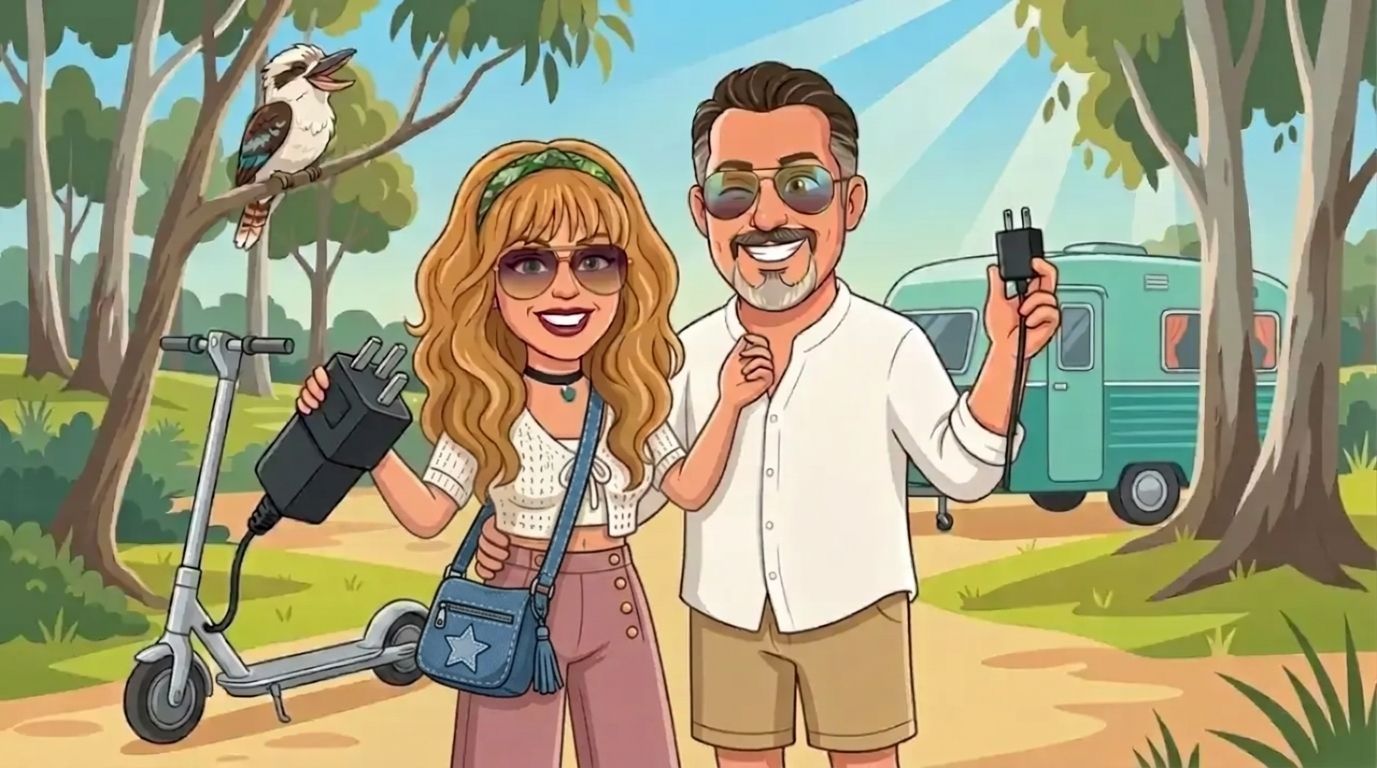
A quality, professionally installed battery system is a different beast. It's matched to its charger, fixed in place and protected from knocks and water. And it has a battery management system: electronics that watch every cell and cut the power before things get too hot or too full.
Plain English, please: "Battery management system" sounds like something that wears a lanyard. The way DJ puts it, it's the bouncer at the surf club door. It checks every cell on the way in, and if one is running too hot or too full, it cuts the power before things get rowdy. No bouncer, no party.

Chemistry matters too. A peer-reviewed study from Germany's Karlsruhe Institute of Technology compared one type of lithium battery, lithium iron phosphate (LFP), with nickel-rich types. Fully charged, the LFP cells held out to about 256°C on average before overheating uncontrollably, compared with about 198°C for the nickel-manganese-cobalt cells. Driving a nail through them didn't set the LFP cells off at all. The researchers called LFP "inherently safer", while noting it still needs a well-designed battery management system. No lithium battery is fireproof.
Plain English, please: "Overheating uncontrollably" has a fancy name: thermal runaway. Picture a row of batteries lined up like dominoes on a log by the campfire. One cell gets hot, the heat makes it hotter still, and it can set off the cell next door, and so on down the line. As DJ likes to remind me, a tougher chemistry simply takes a lot more heat to knock over the first one.


Electric cars catch fire far less often than petrol and diesel cars
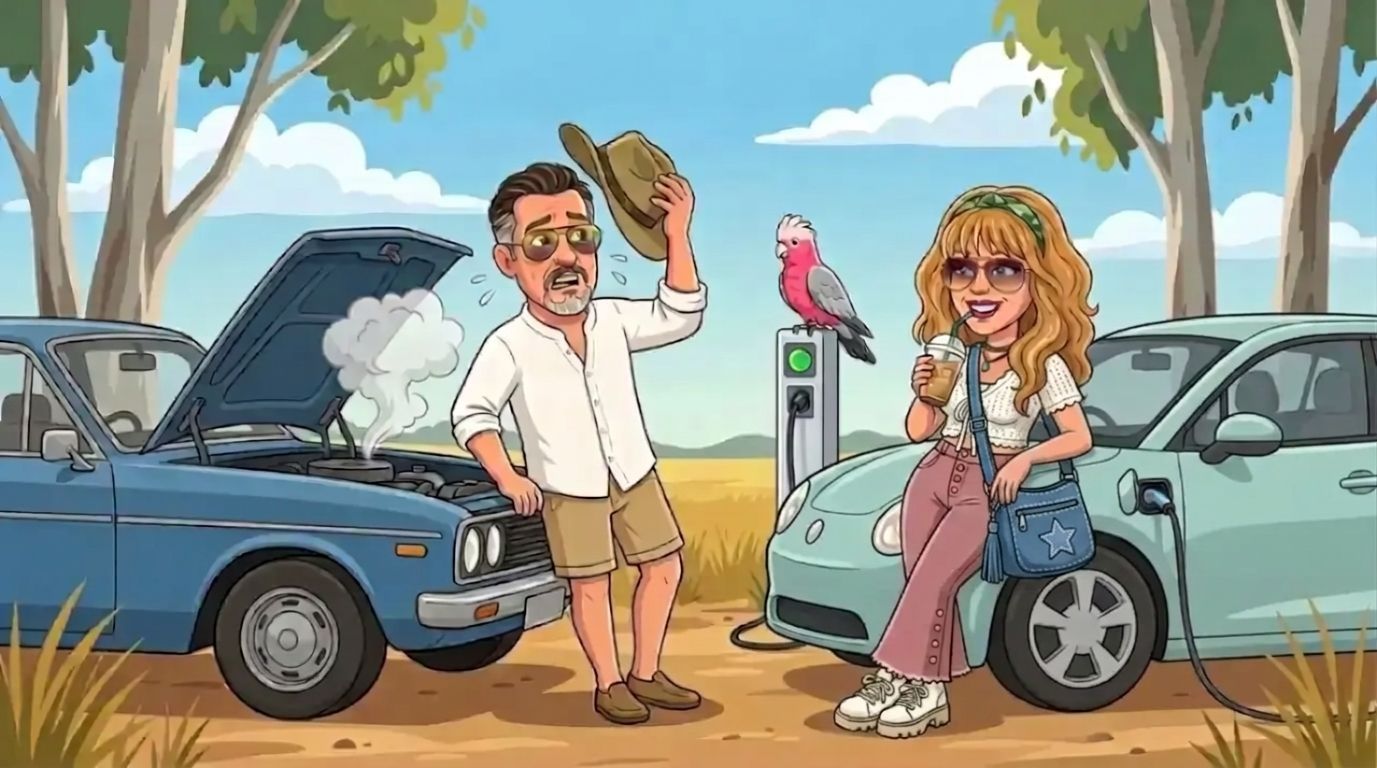
Sweden's Civil Contingencies Agency counted 40 fires in 2024 involving electric and plug-in hybrid cars, out of more than 880,000 on the road. Across all cars there were just over 3,100 fires among almost 5 million. By our maths, that's roughly 4 or 5 fires per 100,000 electric cars versus about 62 per 100,000 cars overall. One catch: deliberately lit fires were counted in the overall number but not the electric one, so the real gap is smaller, but still large.
Plain English, please: "Per 100,000" is where people get tricked. I'll give it to you the way DJ gave it to me: don't count the fires, count how often they happen. There are far more petrol and diesel cars on the road, so of course they rack up more fires in total. It's like saying Sydney has more sunburnt people than Byron Bay. Of course it does, it's got more people. The fair question is how many cars out of every 100,000 caught fire. Even allowing for that catch, electric cars come out well ahead.
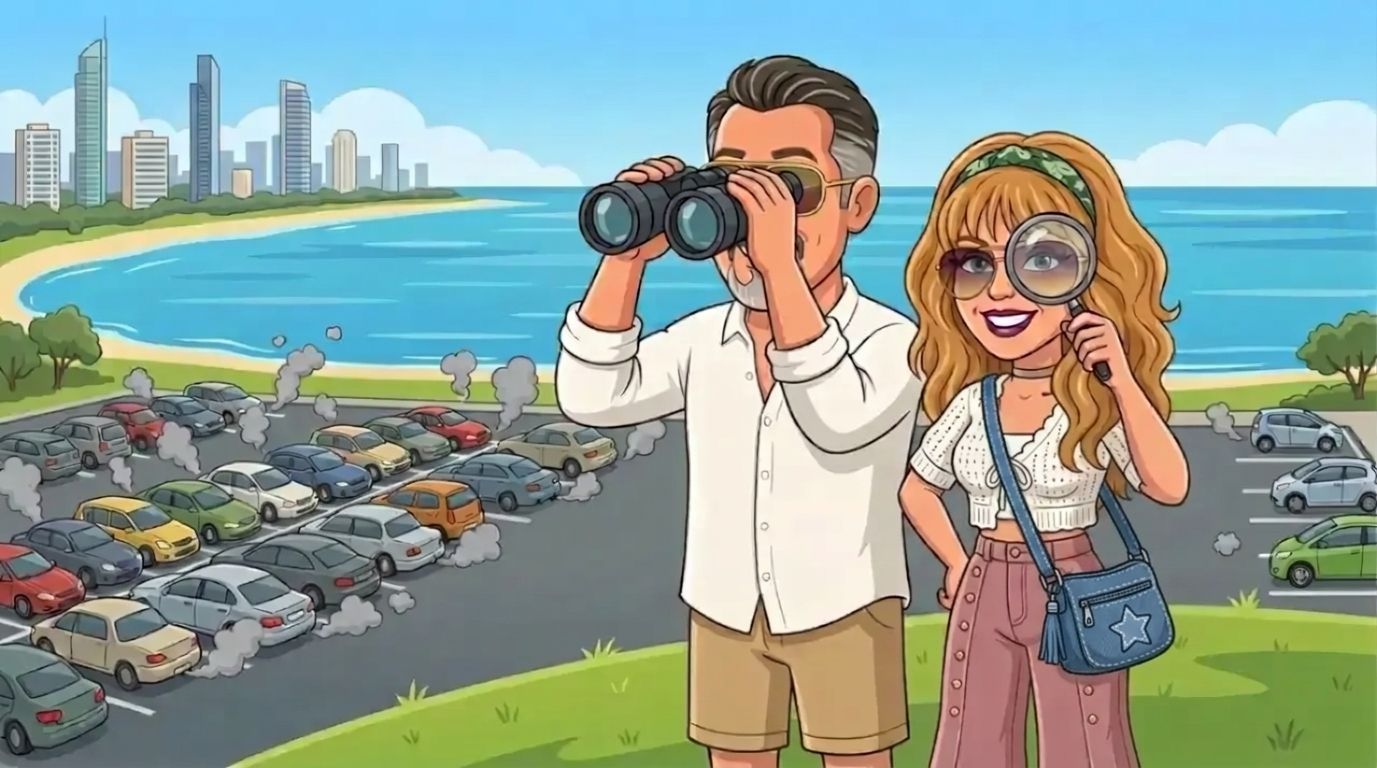
Norway's fire service data, quoted on the Australian Government's vehicle emissions website, gives a fire rate of 0.005% for electric cars versus 0.03% for petrol and diesel cars. Here, the Defence-funded research group EV FireSafe has counted 13 electric car battery fires since 2021 among about 473,000 plug-in vehicles, about 3 in 100,000, mostly after crashes, arson or another fire. To be fair, an electric car battery fire can be harder to put out.
On the water: fuel, gas and fumes
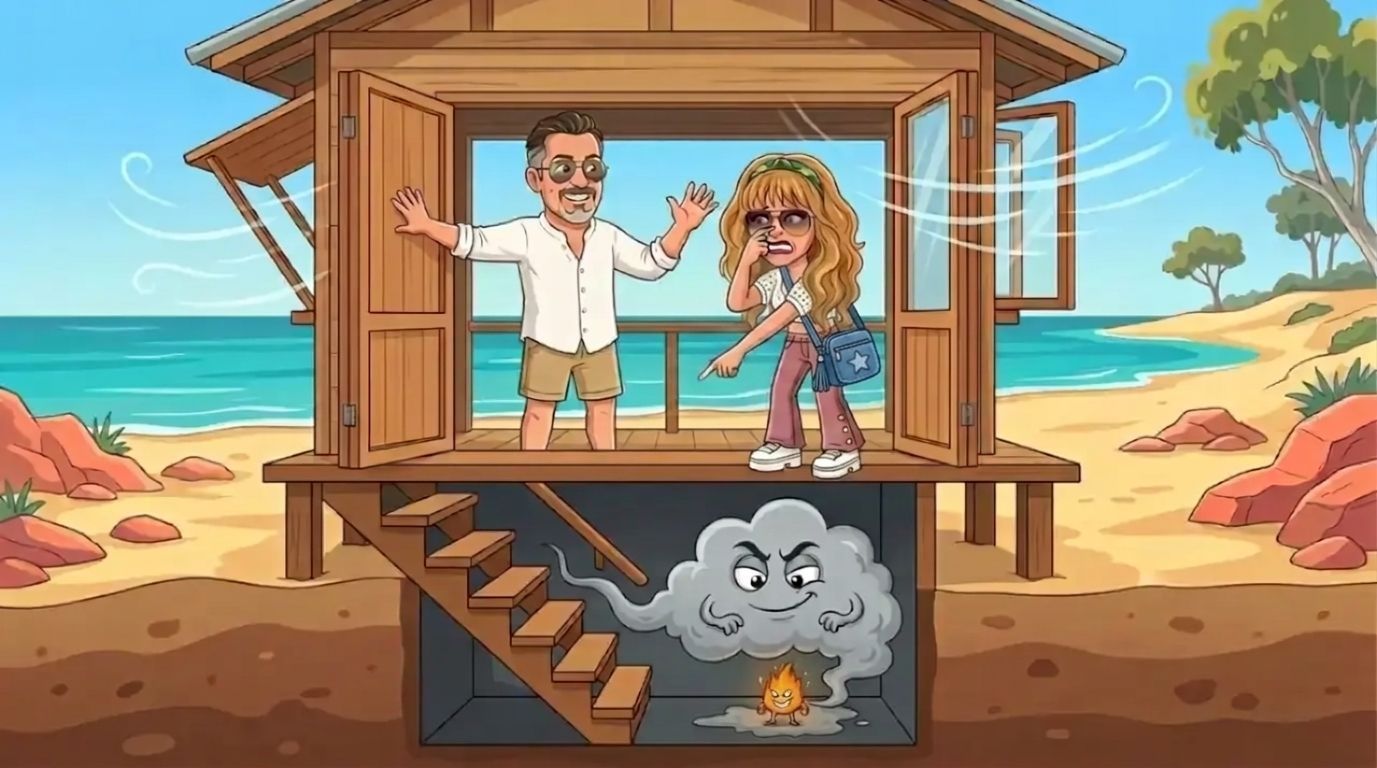
There's no national data on boat fires in Australia, so we looked at what is on record. The Australian Maritime Safety Authority warns that petrol vapour is heavier than air, collects in a boat's bilge, and can explode if it meets a spark.
Plain English, please: The bilge is the lowest part inside a boat's hull, basically its basement, like the dark space under an old Queenslander. Petrol fumes are heavier than air, so instead of floating away they sink down there and hang about, like a sneaky cloud lurking under the house. All it takes is one spark. That's why you air things out before starting a petrol engine. DJ's verdict, nose firmly pinched: not on her watch.
The deaths coroners have examined came from fumes. In Tasmania, two men died of carbon monoxide poisoning on a moored cruiser with a badly installed portable generator. In Sydney, a man died of carbon monoxide on a yacht where an LPG cooker was used in the closed cabin. That NSW inquest also heard of 15 deaths across Australia over six years from gas and solid-fuel appliances in confined spaces such as caravans.

You can't see or smell carbon monoxide. That's why an alarm matters on any boat or caravan with a generator or gas appliance.
We couldn't find a recorded Australian recreational boating death blamed on a lithium battery. That doesn't mean zero risk. The Australian Maritime Safety Authority investigated an explosion that destroyed a berthed charter fishing boat after a new charger appeared to bypass the battery management system in a poorly ventilated space. And a marine surveyor who has attended eight lithium-linked boat fires said they traced back to tools, toys and gadgets charged on board, not professionally installed marine battery systems.
How to stay safe with any lithium battery
Battery care is like looking after your body. Top priority.
This is general advice, drawn from Australian fire services' and safety regulators' guidance where noted.
- Buy certified. In NSW, e-bikes, e-scooters, their batteries and chargers must now meet safety standards and be certified before sale (NSW Fair Trading).
- Don't charge e-bikes or e-scooters next to your bed, or overnight while you sleep. Fire and Rescue NSW advises against overnight charging.
- Use the right charger, the one made for that battery. Mismatched chargers come up again and again in fire services' warnings.
- Don't use damaged, swollen or modified batteries, and never have a pack "rebuilt" in someone's backyard.
- Charge where there's a working smoke alarm, and where you'd notice if something went wrong.
- On a boat, have electrical work done by a qualified marine electrician, with a proper battery management system and ventilation.
- If a battery hisses, smells, swells or gets hot, get away from it and call 000.
Why we care
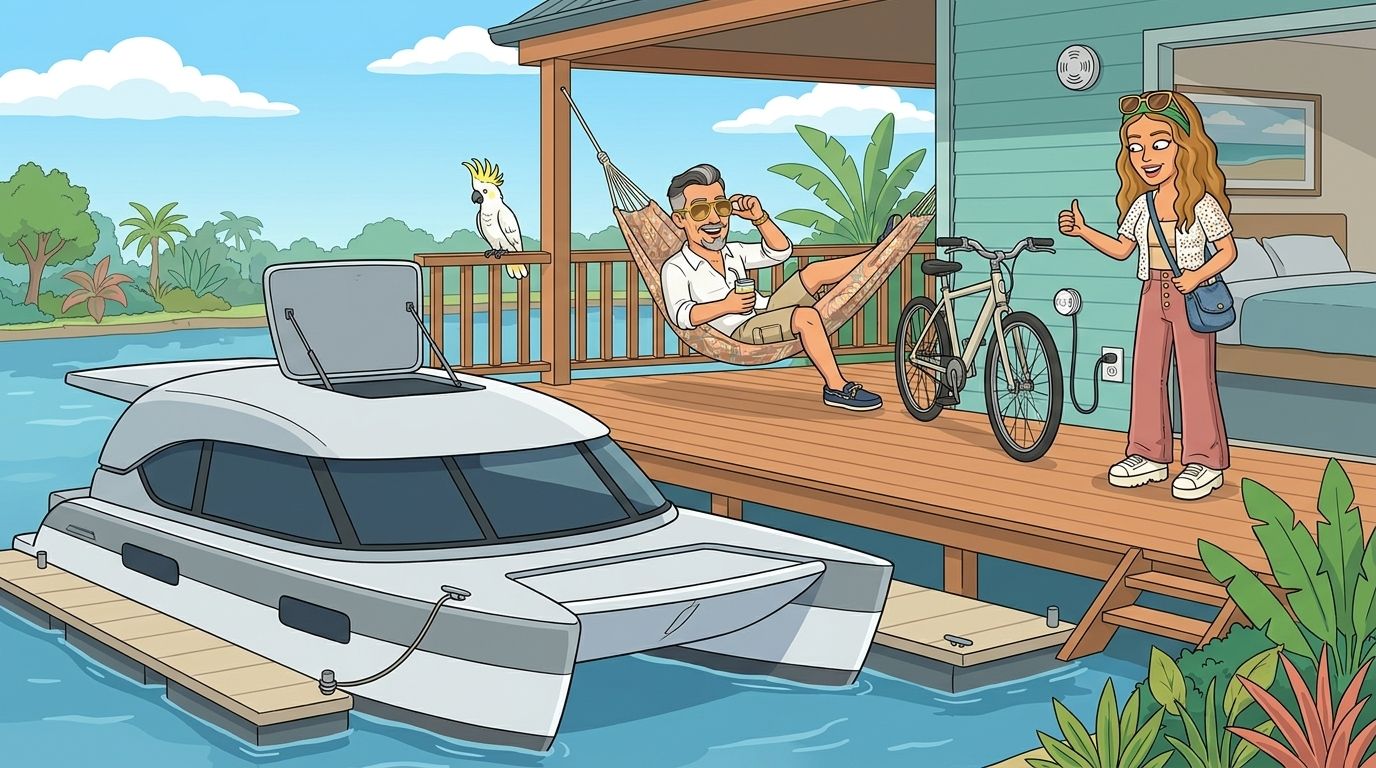
At Cat Cruisers, we build boats that double as caravans: boat by day, caravan by night. When your boat is also where you sleep, knowing the real risks and taking them seriously is just good sense. That's why, for us, battery care is top priority.
Sources
- Fire and Rescue NSW Annual Report 2024-25
- NSW Government: NSW leads the country in battery reform
- ABC News: Fire and Rescue NSW battery fire statistics
- ABC News: NSW inquest into lithium-ion battery fires
- Queensland Fire Department: submission to the e-mobility inquiry
- Australian Government, Vehicle Emissions Star Rating: EV fire safety
- Swedish Civil Contingencies Agency (MSB): fires in electric vehicles 2018–2024
- NRMA Open Road: Understanding electric vehicle fires (EV FireSafe data)
- Ohneseit et al., Batteries (2023): safety of NMC, NCA and LFP cells
- Australian Maritime Safety Authority: petrol vapour safety alert
- Australian Maritime Safety Authority: lithium-ion thermal runaway on a vessel
- NSW Coroners Court: Inquest into the death of Nicholas Banfield
- ABC News: Hobart boat carbon monoxide deaths
- Marine Business News: lithium battery fires on boats (Nautilus Marine Insurance)
- NSW Fair Trading: supplying e-micromobility products