
How Far Can an Electric Boat Go? Range and Speed Explained

By Jason Rieck
Co-Founder & Lead Designer, Cat Cruisers
How far can an electric boat go on one charge? It's the first thing almost everyone asks us. The honest answer: it depends on hull shape, battery size, motor efficiency, speed, wind, current and how much you've loaded on board. Here's how it works, in plain English.
If you've towed a caravan, you already understand it. Your car's fuel use jumps when the van's on the back and you're driving into a headwind. Boats work the same way, only more so.

Knots and nautical miles, quickly
Boats measure distance in nautical miles. One nautical mile is about 1.85 km. Speed is measured in knots, which means nautical miles per hour, so 5 knots is a bit over 9 km/h.
What real electric boats are doing
Range varies a lot from boat to boat, and it drops quickly as speed goes up. One of the best-known long-range examples is a Swedish boat, the Candela C-8. It uses computer-controlled underwater wings called hydrofoils to lift the hull out of the water, a bit like a water-skier rising up as the boat pulls them along. Less boat in the water means far less drag. Its maker quotes a range of up to 57 nautical miles (about 105 km) at 22 knots. Boats without foils usually get much less range at that kind of speed, and the reason is the big one below.

The big one: going faster drains far more than you think
Here's the bit that surprises people. As a rough rule of thumb, the power a boat needs climbs with the cube of its speed. In plain terms, double your speed and you need roughly eight times the power. For example, if a boat needs 2 kW to cruise at 5 knots, it needs roughly 16 kW at 10 knots. Real hulls don't follow the rule exactly, but the pattern holds: a bit more speed takes a lot more power.
Think of riding a bike. Cruising along is easy. Try to go twice as fast and you're not working twice as hard, you're gasping.
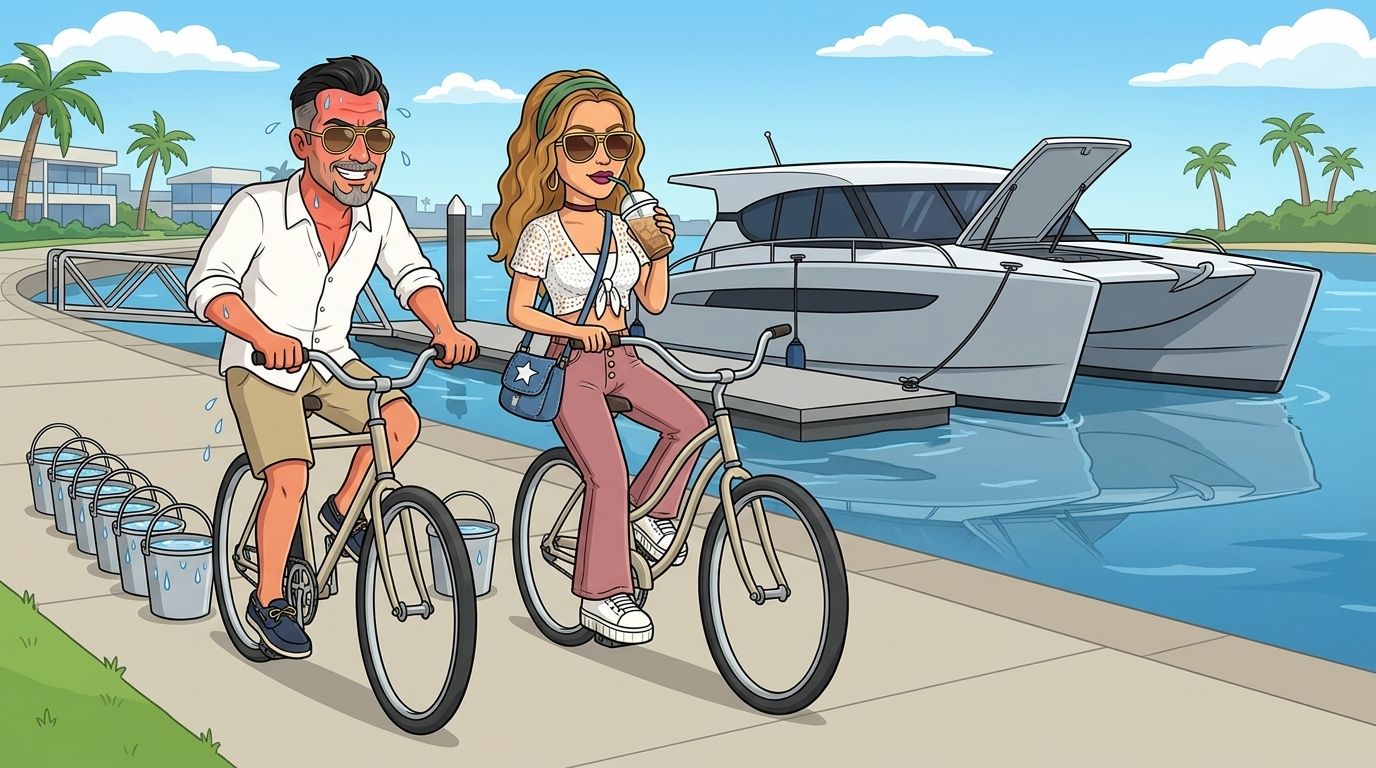
This applies to every boat, not just electric ones. Petrol hides it because a fuel tank holds so much energy. With batteries (measured in kilowatt-hours, or kWh, the same unit as on your power bill), every kilowatt-hour counts, so taking it easy is the secret to range.
There's also a sweet spot. Most electric boats push through the water rather than skimming over it, and they're most efficient well below the hull's natural top speed. Push harder and the boat starts trying to climb over its own bow wave, like running up a sand dune that keeps piling up in front of you.

Why the boat's shape matters more than the battery
It's tempting to think range is all about battery size. But hull design matters just as much. Slim hulls make smaller waves as they move, and for many boats that means less drag than one wide hull, though it depends on the design. Two slim hulls slice through the water like a pair of knives. A single wide hull shoves more water out of the way, more like dragging a spoon through custard.

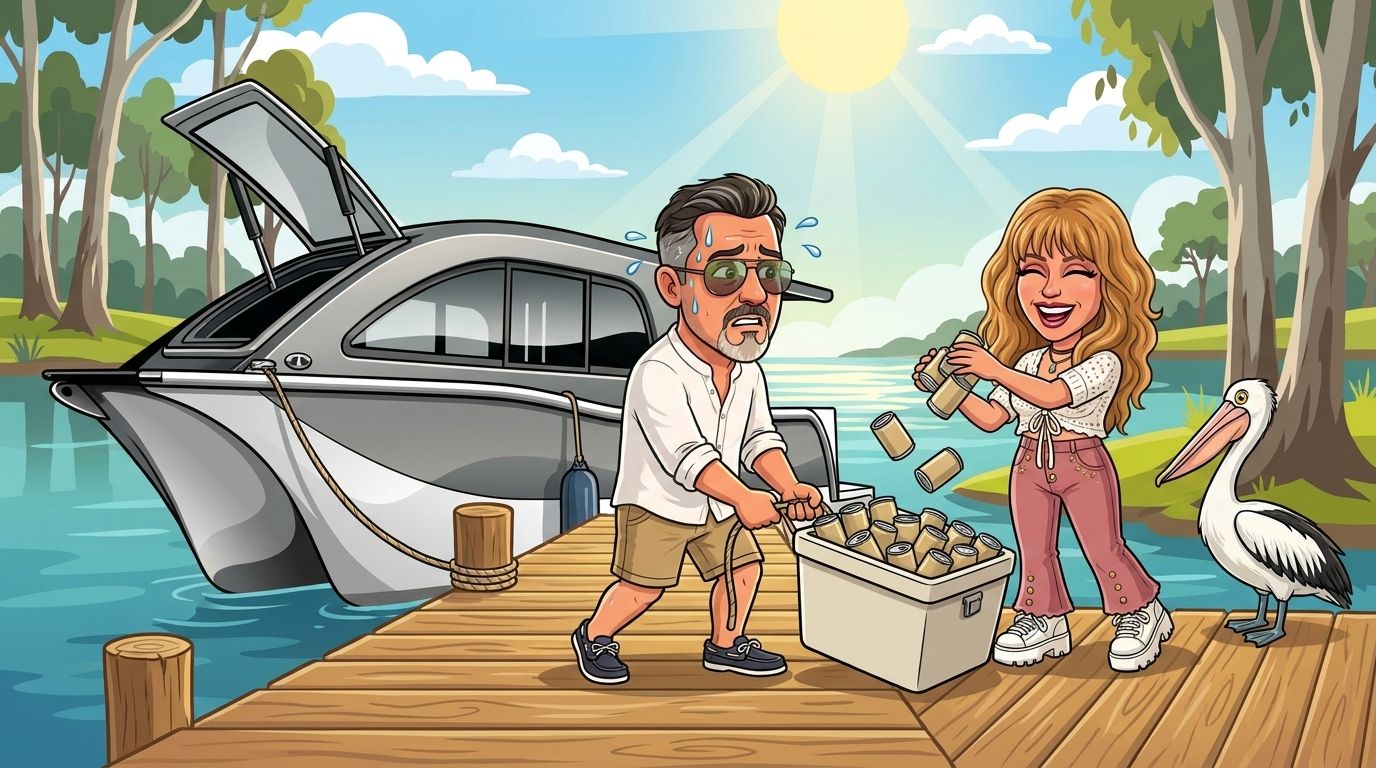
Weight is the other big factor. Every extra kilo takes energy to push along, and batteries are heavy. Add more battery and you add more weight, so past a certain point, extra battery actually hurts range. It's like packing a bigger esky for a long day out: more drinks, but a heavier load to lug. Good design finds the balance.
Topping up along the way
Solar can help, especially in Australia. Coastal north Queensland averages around 5.5 kWh of sunshine per square metre per day across the year, so panels on a catamaran roof can put energy back into the battery at anchor or under way. Solar stretches a sunny day. It doesn't replace charging.
Fast charging for boats is starting to appear too. Australia's first electric-boat fast charger was installed at The Quays Marina in Church Point, Sydney, in 2023. It's early days, so for now many electric boaters charge overnight from a standard 15-amp outlet (the caravan-style plug) or marina shore power.
What that means for a Cat Cruiser
Cat Cruisers are designed around the way Australians actually use boats. Twin electric motors (5 kW each on the 650, 10 kW each on the 870) draw from a 60 kWh drive battery. The 5,000 W of roof solar helps stretch a sunny day, a fast charge takes about an hour, and a separate house battery looks after life on board. The twin hulls are designed to make the most of every kilowatt-hour.
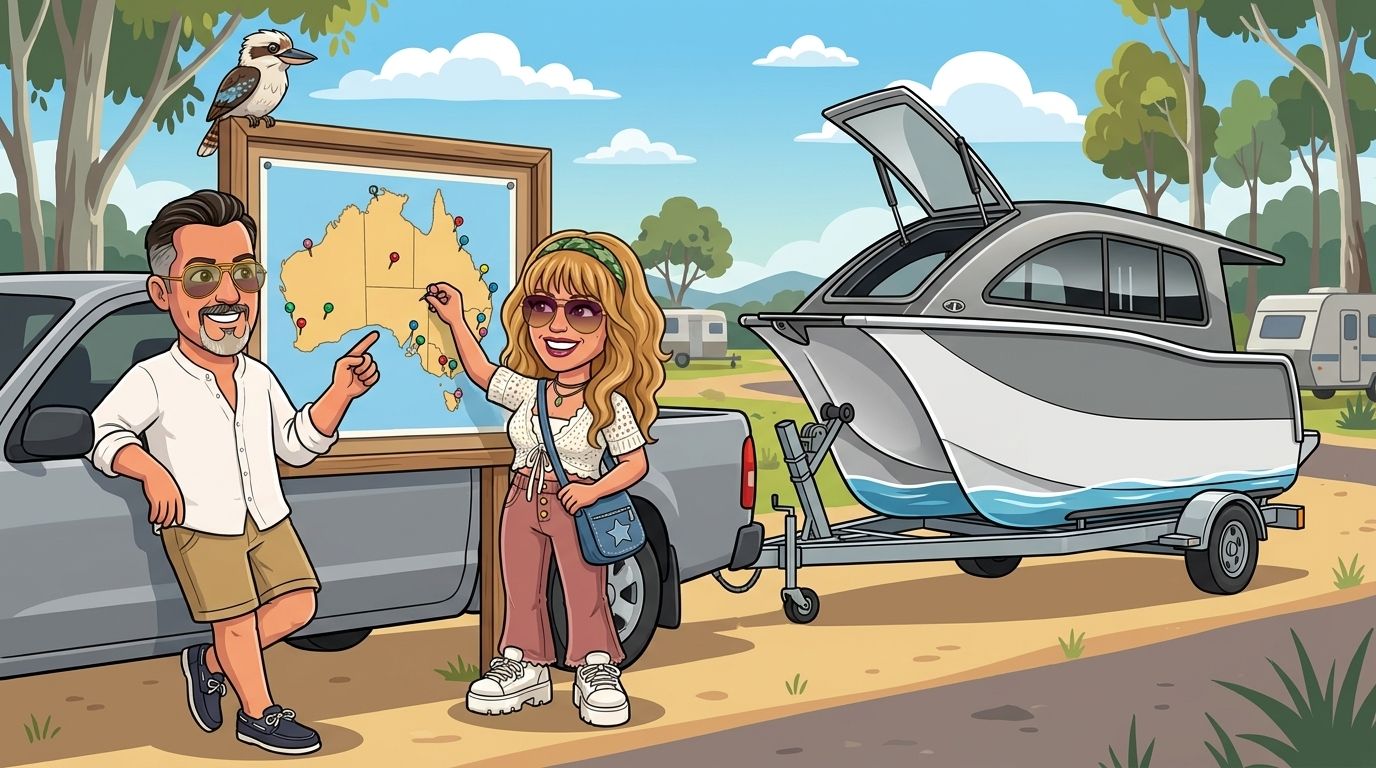
And because every Cat Cruiser is trailerable, range means something different. You're not stuck on one waterway. Tow to a new spot, charge up, and explore a different stretch of water the next day. The range isn't just what the battery holds. It's everywhere you can tow the boat and plug it in.
Curious how range works in real life? Have a chat with the team at catcruisers.com.au/contact.