
How to Charge an Electric Boat, From Shore Power to Solar
By Jason Rieck
Co-Founder & Lead Designer, Cat Cruisers
One of the first questions people ask about electric boats is simple: how do you charge it? The answer is simpler than most expect, but the jargon gets in the way. Volts, amps, kW, kWh, shore power, fast charging. Here's what it all means, in plain English.
Energy vs power: the bucket and the tap
Two numbers matter most, and they're easy to mix up.
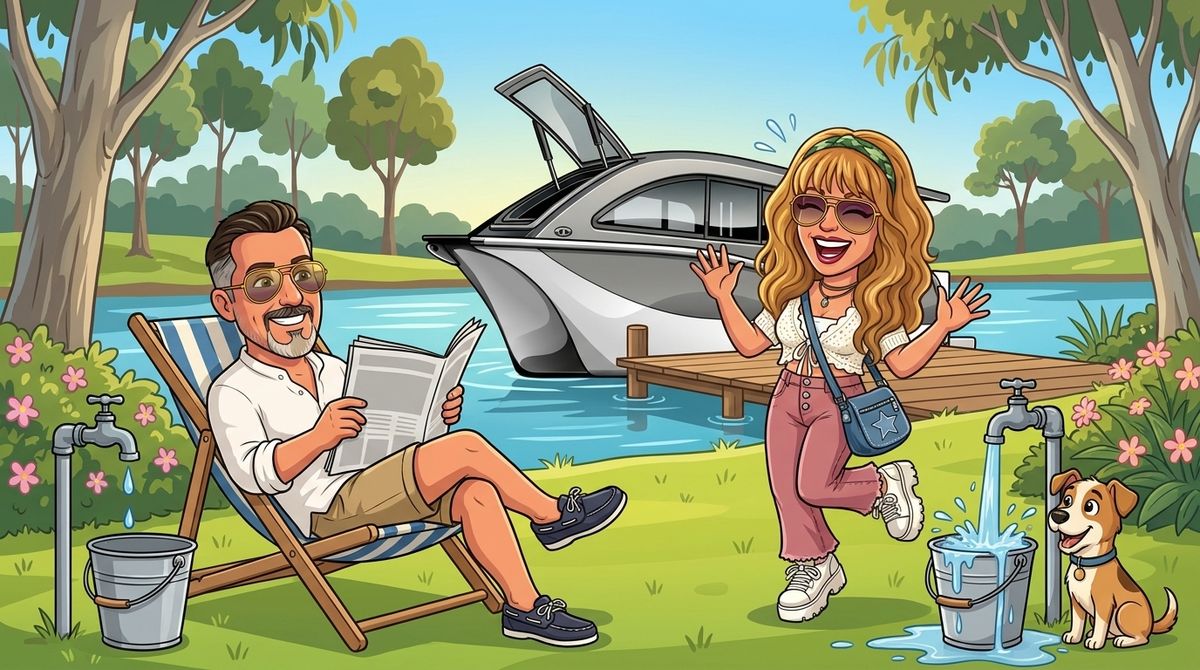
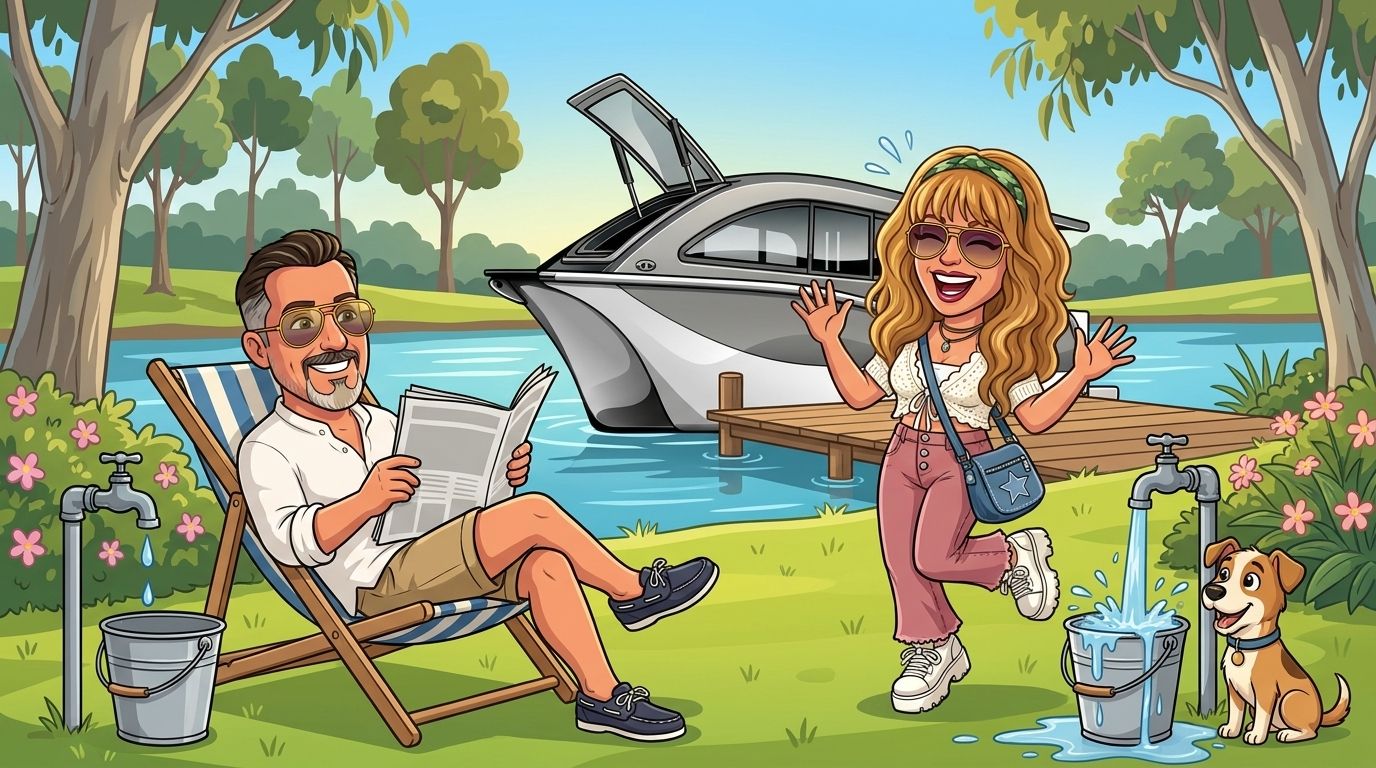
Kilowatt-hours (kWh) measure energy: how much the battery holds. It's the same unit as on your home power bill. Think of it as the size of a bucket.
Kilowatts (kW) measure power: how fast energy flows in or out. Think of it as how far the tap is turned on.
A bigger bucket holds more. A bigger tap fills it faster. As a general example, a 20 kWh battery on a 5 kW charger takes roughly four hours to fill from empty, plus a little extra for losses.
Volts and amps are the ingredients of power. Multiply them and you get watts. That's why a 15-amp outlet on Australia's 240-volt supply can deliver up to about 3.6 kW, while a standard 10-amp power point delivers less.
Plugging in at home or at a powered site
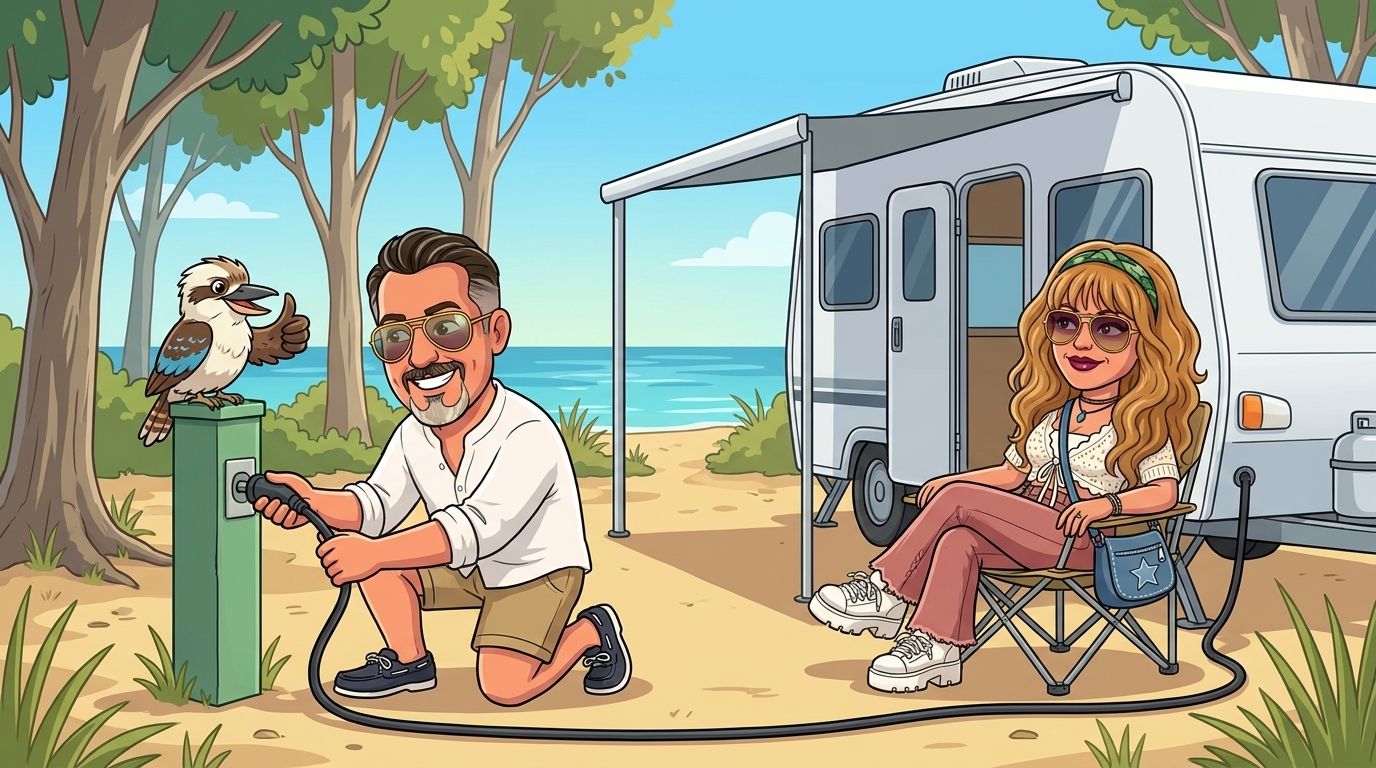
The simplest way to charge is from a standard 15-amp outlet, the same heavy-duty plug you'd use for a caravan at a powered site. It's slow compared with a fast charger, but it's familiar and widely available. Plug in after a day out and let it charge.
General tip: off-peak electricity is often cheaper, so charging overnight at home can save money. Check your own electricity plan.
Marina shore power
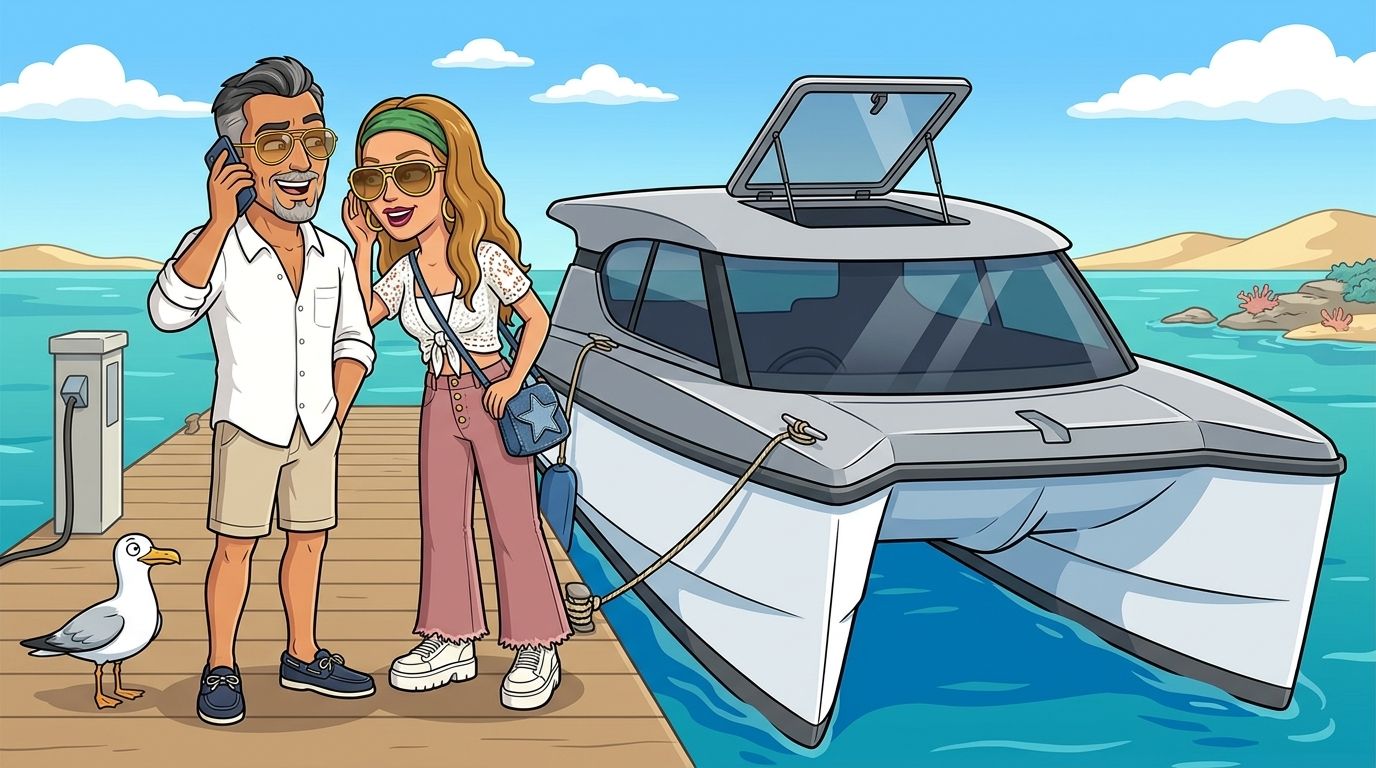
Many marinas offer shore power at the berth: a power outlet on the jetty you can plug into. Supplies vary from marina to marina, and a higher-powered supply can charge faster than a standard outlet. It's worth checking what's available before you arrive, a bit like ringing ahead to check a campsite has powered sites.
Fast charging: the new kid on the jetty
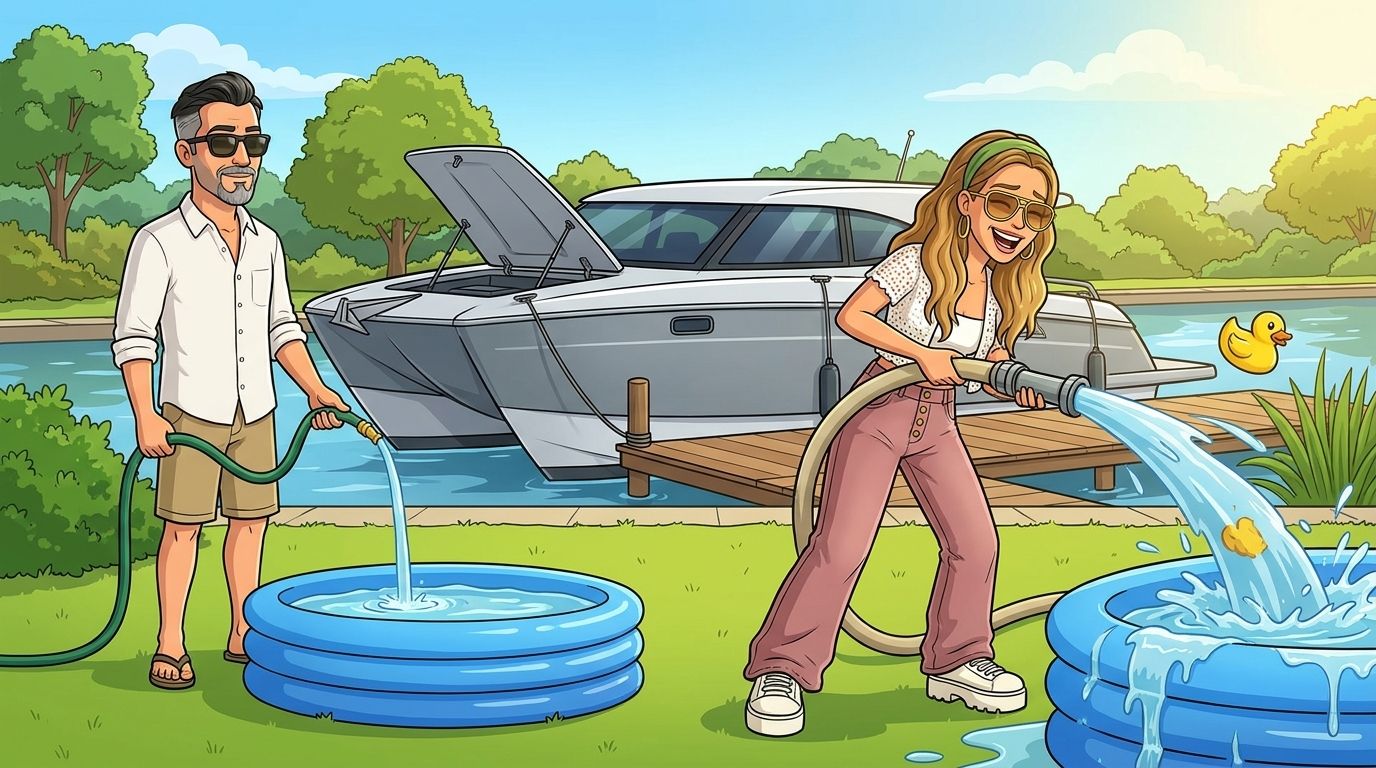
Fast chargers push a lot more power into the battery, so charging takes a fraction of the time. Think garden hose versus fire hose.
Marine fast charging is still new in Australia. The country's first electric-boat fast charger was installed at The Quays Marina in Church Point, Sydney, in 2023. It's early days, but it's a sign of what's coming, much like the first electric car chargers popping up beside highways.
Solar: a top-up, not a refill
Australia's sunshine makes solar a handy extra. Panels on a boat roof can put energy back into the battery while you're at anchor or cruising. It's like dripping water into a jerry can all day: useful, and it adds up on a sunny day, but it's not the same as filling it at the tap. Solar stretches a sunny day. It doesn't replace plugging in, and cloud, shade and season all change how much you get.

Putting it together
This is general advice. The smartest approach usually mixes a few methods:
- Charge at home or at a powered site when you can.
- Use solar to top up during the day.
- Use marina shore power on longer trips.
- Use fast charging where it's available and your boat supports it.
- Always use the charging equipment and connections your boat's manufacturer specifies.
How it works on a Cat Cruiser
A Cat Cruiser has a 60 kWh drive battery for the motors (that's the bucket) and a separate house battery for life on board. A fast charge takes about an hour. On the roof, 5,000 W of solar helps stretch a sunny day. Which charging options suit you depends on the power supply where you are, so the team can walk you through what works for your set-up.
Want to know more about charging? Have a chat with the team at catcruisers.com.au/contact.