
NSW's 23,000 Swing Moorings Are Under Review. Here's What It Means for Where You'll Keep Your Boat
In early October 2026, the Boating Industry Association (BIA) booked itself into NSW Parliament House for a Parliamentary Drop-In Day and put one message in front of the state's decision-makers: the way NSW manages its moorings is broken, and the people who'll pay for the breakage are ordinary boat owners.
The BIA's Enhance Boating NSW policy manifesto lays out three priorities: protecting working waterfront land for marinas and boatyards, modernising a marina planning framework that "has seen no substantive structural update since the 2005 SREP", and — the one that affects the most owners — comprehensive reform of NSW's 23,000+ swing moorings, which the BIA says face "fragmented agency oversight and abrupt regulatory proposals" that "threaten vessel storage affordability, marine service jobs and boat ownership" [1].
That's not industry jargon. Swing moorings are the cheapest way to keep a boat on the water in NSW, and for a lot of owners they're the only affordable way. If the rules around them change — what type of mooring is allowed, what it costs, who administers it — the annual cost of owning a boat in NSW changes with them.
Here's what's actually on the table, and what it means if you're buying a boat or already sitting on a mooring waiting list.
Why Swing Moorings Matter More Than Most Owners Realise
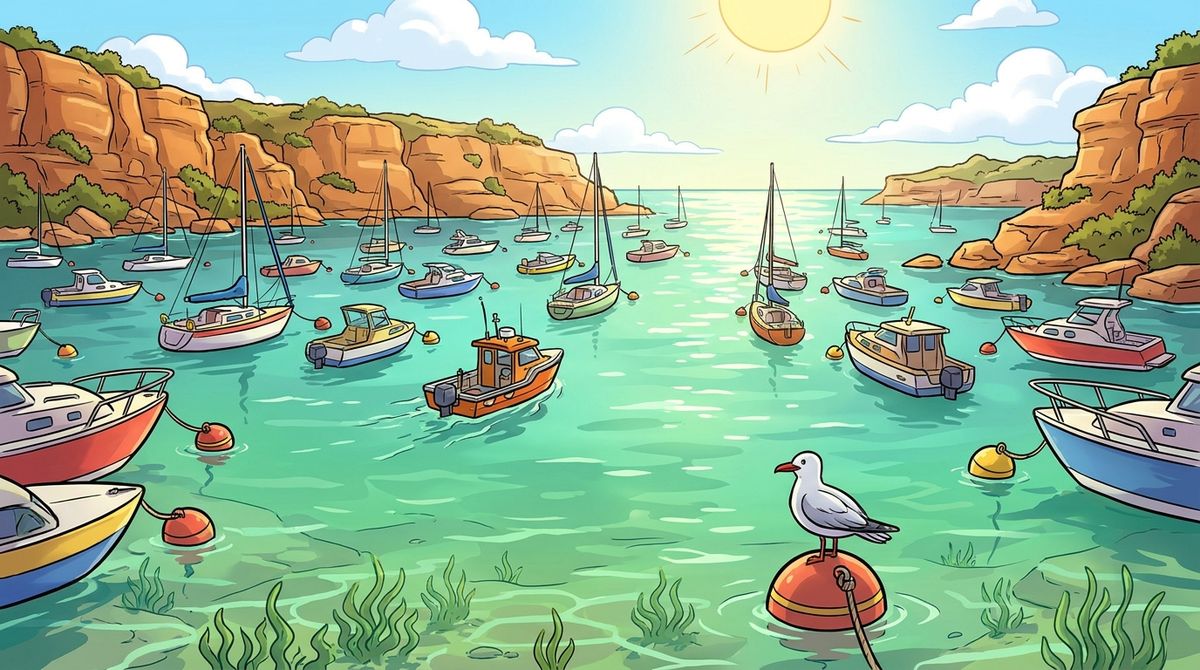
A swing mooring is the classic "buoy on a chain and block" setup you'll see in any NSW bay: the boat swings around its anchor point with wind and tide. It's the most common mooring type in the state by a wide margin, and it exists for one reason — it's the cheapest way to store a boat on the water.
Transport for NSW manages more than 23,000 private and commercial mooring sites across the state, and runs an ongoing audit program requiring licence holders to service their mooring apparatus annually and prove their vessel is seaworthy [2]. Demand outstrips supply in the popular spots: wait lists for moorings in some Sydney Harbour bays run to years, not months.
Which is why the BIA's reform push matters to anyone who owns — or is about to buy — a trailerable or larger vessel in NSW.
What the BIA Is Actually Asking For
The manifesto's mooring platform has four concrete asks, and none of them are radical [1]:
- One department, not two. Mooring administration is currently split between Transport for NSW and DPI Fisheries, which the BIA says produces conflicting compliance demands and duplicated red tape. It wants a single TfNSW-led program. No abrupt rule changes without a cost-benefit analysis. The BIA wants a pause on unilateral regulatory determinations — including the proposal to declare swing moorings a Key Threatening Process — until DPI Fisheries completes a formal Regulatory Impact Statement covering financial burdens, technical viability and small-business impacts. Performance standards for new mooring tech, not bans. The association wants TfNSW, marine engineers and Standards Australia to set performance-based standards for Environmentally Friendly Moorings (EFMs) — the screw-pile and elastic designs that hold a boat without a chain dragging across the seabed — plus an "innovation challenge" to make them cheaper and more available. Public seagrass mapping. Modern, interactive mapping of seagrass beds so degraded areas and critical ecosystems are treated differently, rather than blanket rules applied bay-wide.
This sits against a policy backdrop that already exists: TfNSW's Moorings Action Plan, which covers best-practice guidance for mooring apparatus, management of end-of-life vessels, CSIRO-partnered EFM research, and a marine-parks mooring review [3]. In other words: reform is coming regardless. The BIA's argument is about how — and who wears the cost.
The Environmental Problem Is Real — and So Is the Cost Problem
To be fair to the regulators, the underlying issue is genuine. Traditional chain-and-block swing moorings scour the seabed as the chain drags around its block, damaging seagrass beds that juvenile fish and crustaceans depend on. Environmentally Friendly Moorings solve this by keeping all components off the seabed entirely — but they cost more to install, require specialist contractors, and supply is thin.
That's the squeeze the BIA wants managed rather than ignored: if bays are re-zoned or mooring types are restricted before EFMs are affordable and available, owners with older apparatus could be handed bills in the thousands — or lose their mooring spot altogether — for a problem they didn't create.
And moorings aren't the only pressure point. The BIA is simultaneously arguing that working waterfront land — the yards that store, service and repair boats — is shrinking under urban development, and that growth areas like Woollahra and Mosman are delivering thousands of new harbour-side apartments "with zero corresponding expansion in marine or boating infrastructure" [1]. More boats, more residents, same amount of water.
What This Means If You're Buying a Boat
Whether the reforms land softly or hard, the direction is clear: on-water storage in NSW is going to get more regulated, more audited, and probably more expensive over the next few years. If you're a first-time buyer, that's a line item worth pricing before you sign anything — not after.
Five practical questions to ask before you buy:
- Where will it sleep? A marina berth is the premium option. A swing mooring is cheaper but comes with wait lists, annual servicing obligations and now regulatory uncertainty. Dry stack and trailer storage sit in between — and the storage decision alone can swing total annual ownership cost more than any other single choice. Is the mooring transferrable? If you're buying a boat that "comes with a mooring", check the licence conditions with TfNSW before you count it as an asset [2]. What's the apparatus age and type? Older chain-and-block gear is the most exposed to reform. Ask when it was last serviced and whether an EFM upgrade would be required. What are the annual fees and servicing costs? Licence fees plus a professional mooring service inspection are recurring costs every year, and proof of service is part of the audit program [2]. Do you even need a mooring? This is the question most buyers never ask. A genuinely trailerable vessel — or an amphibious one that drives itself off the beach — skips the mooring, the berth, the ramp queue and the wait list entirely, and stores on a trailer at home or in a yard.
That last option is where the market has been quietly heading. Storage anxiety is one of the biggest reasons buyers gravitate to trailer boats in the first place, and it's also why amphibious designs — vessels that live on a trailer like a caravan and enter the water under their own power — keep gaining attention. Cat Cruisers builds trailerable amphibious vessels on the Gold Coast for exactly this reason: no mooring licence, no berth fees, no dependence on a bay full of swing moorings that may be regulated differently by next summer. You can see one in person and take a sea trial before deciding anything.
The Bottom Line
The BIA's Parliament House pitch isn't anti-regulation — it's a request that mooring reform be sequenced, costed and co-designed with the industry rather than imposed bay by bay. For owners, the smart move is the same either way: understand your storage options before they narrow, budget mooring fees and servicing as real annual costs, and consider whether your next vessel genuinely needs a mooring at all.
With 23,000+ mooring sites in play and a regulator already mid-reform, the owners who'll do best are the ones who treated storage as a purchase decision — not an afterthought.
Sources
1. Boating Industry Association, "BIA Advocates for Marina and Boatyard Priorities in NSW", 7 October 2026. https://bia.org.au/another/bia-advocates-for-marina-and-boatyard-priorities-in-nsw/
2. Transport for NSW / NSW Government, "Mooring type, licence and fees", 2026. https://www.nsw.gov.au/driving-boating-and-transport/using-waterways-boating-and-transport-information/mooring-type-licence-and-fees
3. Transport for NSW, "Moorings Action Plan" (Centre for Maritime Safety), 2026. https://www.transport.nsw.gov.au/operations/roads-and-waterways/waterways/centre-for-maritime-safety/moorings-action-plan