
Sodium-Ion Batteries Are Coming: The Honest Pros and Cons
By Jason Rieck
Co-Founder & Lead Designer, Cat Cruisers
You may have heard that sodium batteries are coming. They are, and they're genuinely interesting. A sodium-ion battery uses sodium, the same element that's in table salt, instead of lithium. But there's a lot of hype around them, so we went to the International Energy Agency (IEA), the International Renewable Energy Agency (IRENA) and published research to sort out what's real. We've compared them mainly with lithium iron phosphate (LFP), the lithium battery most people know today.
To help with the jargon, I've roped in my co-host, DJ. She has a real knack for turning tech-speak into plain Aussie English, so whenever a technical term turns up, we'll stop and tell you what it actually means. No engineering degree required.
Short on time? Watch our 76-second cartoon version here.
What is a sodium-ion battery?
A sodium-ion battery works on the same basic idea as the lithium batteries in phones, electric cars and caravans. It moves charged atoms back and forth between two sides of the cell to store and release energy. The difference is the atom doing the travelling: sodium instead of lithium. Sodium is the "sodium" in sodium chloride, better known as table salt, and it's one of the most plentiful elements on Earth. Nobody is pouring salt shakers into batteries, though. The sodium comes from cheap, common compounds like soda ash (sodium carbonate). No lithium is needed at all, and some versions also skip cobalt and nickel.
Plain English, please: An "ion" is just an atom carrying an electric charge. DJ's version: the ions are ferry passengers shuttling between two wharves. Charging sends them one way, and using the power brings them back. Lithium-ion and sodium-ion batteries just use different passengers. Sodium ions are bigger and heavier, so the rest of the cell is designed a little differently, and that's where both the benefits and the trade-offs come from.
Why they're "coming"
Sodium-ion isn't a lab dream any more. The IEA notes the first sodium-ion storage system went in back in 2019, and the first sodium-ion electric car went on sale in late 2023. It's still small: in 2025, sodium-ion production was less than 1% of lithium-ion's. But the IEA says the largest battery makers are starting commercial-scale deployment across several sectors from 2026. IRENA lists where it's turning up first: home and grid energy storage, compact city cars, and two- and three-wheelers, with sodium-ion e-scooters already on sale.
Here in Australia, the Australian Renewable Energy Agency (ARENA) has backed a University of Wollongong project that demonstrated sodium-ion battery packs storing solar energy at a net-zero home and at a Sydney Water site. Supply is still concentrated, though: the IEA says over 95% of manufacturing capacity is currently in China.
Plentiful ingredients
Sodium is everywhere, in sea water, salt pans and soda ash, so it doesn't carry lithium's supply worries. IRENA points out two more savings. Sodium carbonate costs far less than lithium carbonate. And sodium-ion cells can use aluminium instead of copper for the current collector on the negative side, because sodium doesn't react with aluminium the way lithium does. Some sodium-ion chemistries, such as the "Prussian white" and polyanion types, use no nickel or cobalt at all. But the layered-oxide type closest to wide use does contain nickel and manganese, so it's fair to say "some versions" skip cobalt and nickel, not all of them.
Plain English, please: A "current collector" is the thin metal foil that carries electricity in and out of each side of the cell, like the wiring behind the walls of a house. Aluminium is the cheaper of the two.
Safety, and shipping fully flat
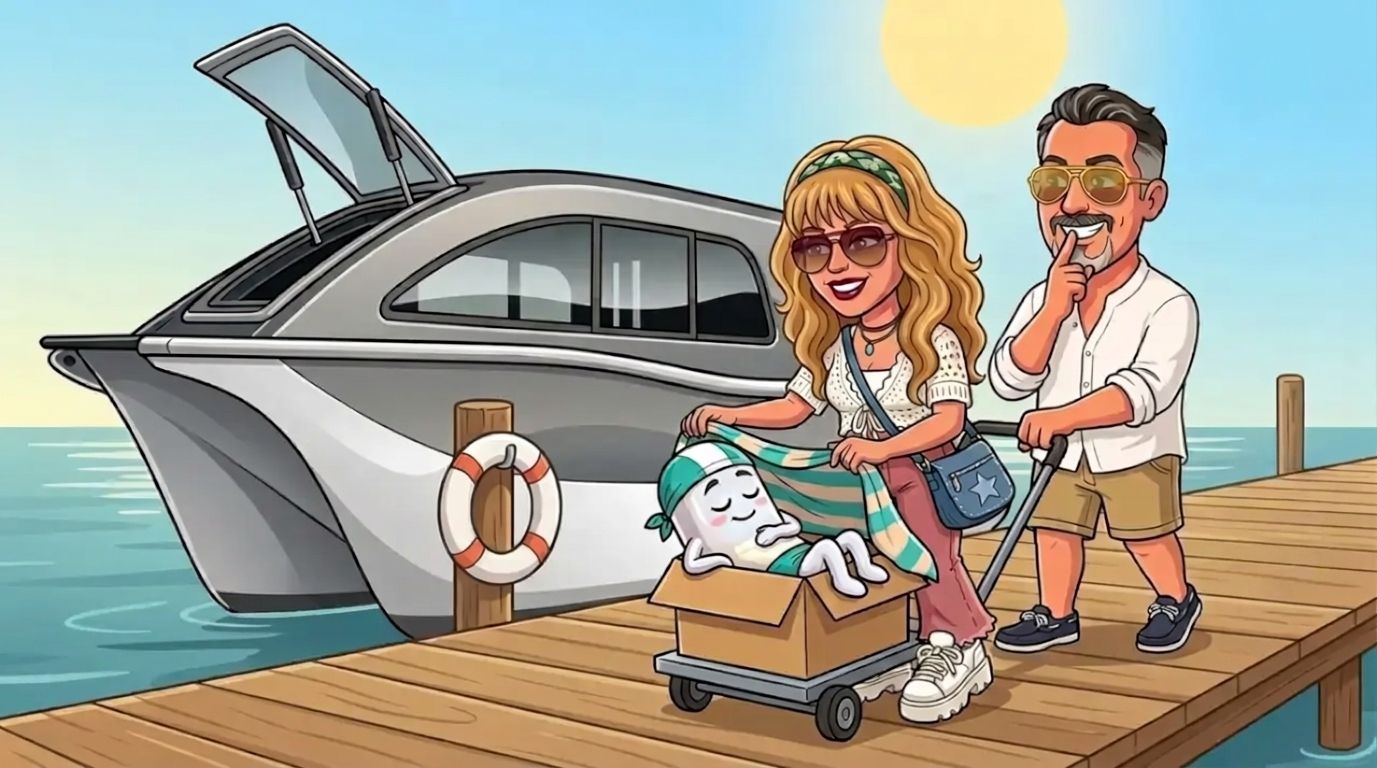
IRENA reports that sodium-ion cells generally have better thermal stability and tolerate abuse better than lithium-ion. The Faraday Institution notes that sodium-ion electrolytes tend to have a higher flash point. There's also a neat trick lithium can't do: many sodium-ion cells can be discharged all the way to zero volts and stored or shipped that way. With no energy on board, a damaged cell in transport has far less to release. Most lithium-ion cells can't do this, because their copper current collector starts dissolving near zero volts. A University of Sheffield study of a commercial sodium-ion cell found no damage from zero-volt operation.
One honest caveat: researchers note this isn't built into every sodium-ion chemistry, and sodium-ion is not fireproof. It still needs a proper battery management system, correct installation and sensible care.
Frosty mornings
Cold weather is where sodium-ion really shines. The IEA says sodium-ion has significantly better low-temperature performance than lithium-ion, especially lithium iron phosphate. The latest cells keep about 90% of their capacity at –40 °C, and they operate up to 70 °C at the hot end. IRENA gives a working range of roughly –40 °C to 80 °C for mass-produced cells. That's why the IEA says sodium-ion is already cost-effective for electric cars and storage in very cold climates.
One honest detail: "works in the cold" mostly means it delivers its stored energy well when it's frosty. Whether a particular battery can also be charged below freezing depends on its spec sheet, and some limit charging to above 0 °C. So check before you plug in on a Snowy Mountains morning.

Charging time
You'll see bold fast-charge claims for sodium-ion. IRENA's brief reports manufacturers' figures of 80% charge in about 15 minutes for some cells. But independent testing tells a more mixed story. A peer-reviewed teardown by Germany's Karlsruhe Institute of Technology found one commercial sodium-ion cell rated for a maximum charge rate of 1C, and charging it faster than that made it age quickly. So the honest answer is that some sodium-ion batteries are built for quick top-ups and others aren't, just like lithium. The charge rate on the spec sheet is what counts, and in a caravan or boat, your charger, solar and alternator setup usually sets the pace anyway.
Plain English, please: "1C" means charging at a rate that would fill the battery in about an hour. DJ says to think of it like a speed limit sign for charging: every battery has its own, and it's printed on the spec sheet.
The honest weight story
Against old lead-acid batteries, sodium-ion is a big win. IRENA puts mass-produced sodium-ion cells at about 90–160 watt-hours per kilo, versus 25–50 Wh/kg for lead-acid. So for the same energy it's roughly a third of the weight, or better.
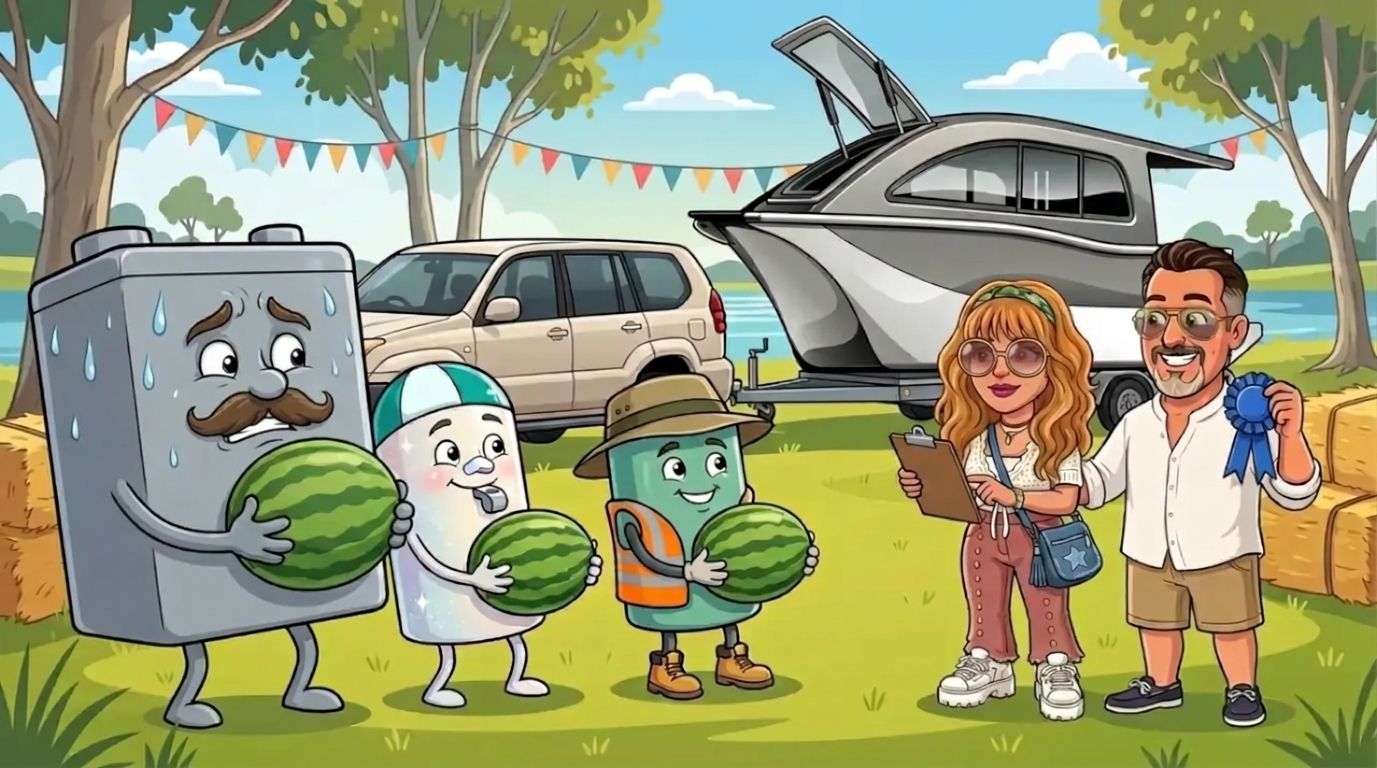
Against lithium, it's the other way around, for now. The IEA says the latest sodium-ion cells reach up to about 175 Wh/kg, against up to about 205 Wh/kg for the best lithium iron phosphate cells and around 255 Wh/kg for lithium nickel manganese cobalt oxide (NMC). So for the same stored energy, even the best sodium-ion cells are roughly a sixth heavier than top lithium iron phosphate cells, and the gap is bigger again by volume. The good news is that it's closing: IRENA says the next generation is expected to reach about 190–200 Wh/kg. So think of sodium-ion as a big step up from lead-acid and close behind lithium, not ahead of it.
Plain English, please: "Watt-hours per kilo" (Wh/kg) is how much energy a battery carries for its weight. DJ's version: picture backpacks that weigh the same and ask how much water each one holds. The higher the number, the lighter the battery for the same job.
Lifespan and cost
Lifespan varies a lot between sodium-ion designs. IRENA gives a range of about 500 to 8,000 cycles for mass-produced cells. Leading manufacturers report keeping 80% of capacity after 4,000–5,000 cycles, which would put the best cells in the same league as good lithium iron phosphate.
On cost, the raw ingredients are cheaper and more plentiful than lithium's, but the finished battery isn't cheaper yet. The IEA says that at today's lithium costs, sodium-ion isn't yet cheaper than lithium iron phosphate for most uses, partly because lithium has become cheaper and lithium iron phosphate is made at huge scale. Sodium-ion's cost edge is expected to grow as production scales up, and it's already the cost-effective choice in very cold climates.
Plain English, please: A "cycle" is one full charge and discharge. DJ compares it to a full tank of fuel: filling up and driving until it's empty is one cycle, and two half-tanks add up to one too.
How to look after any battery
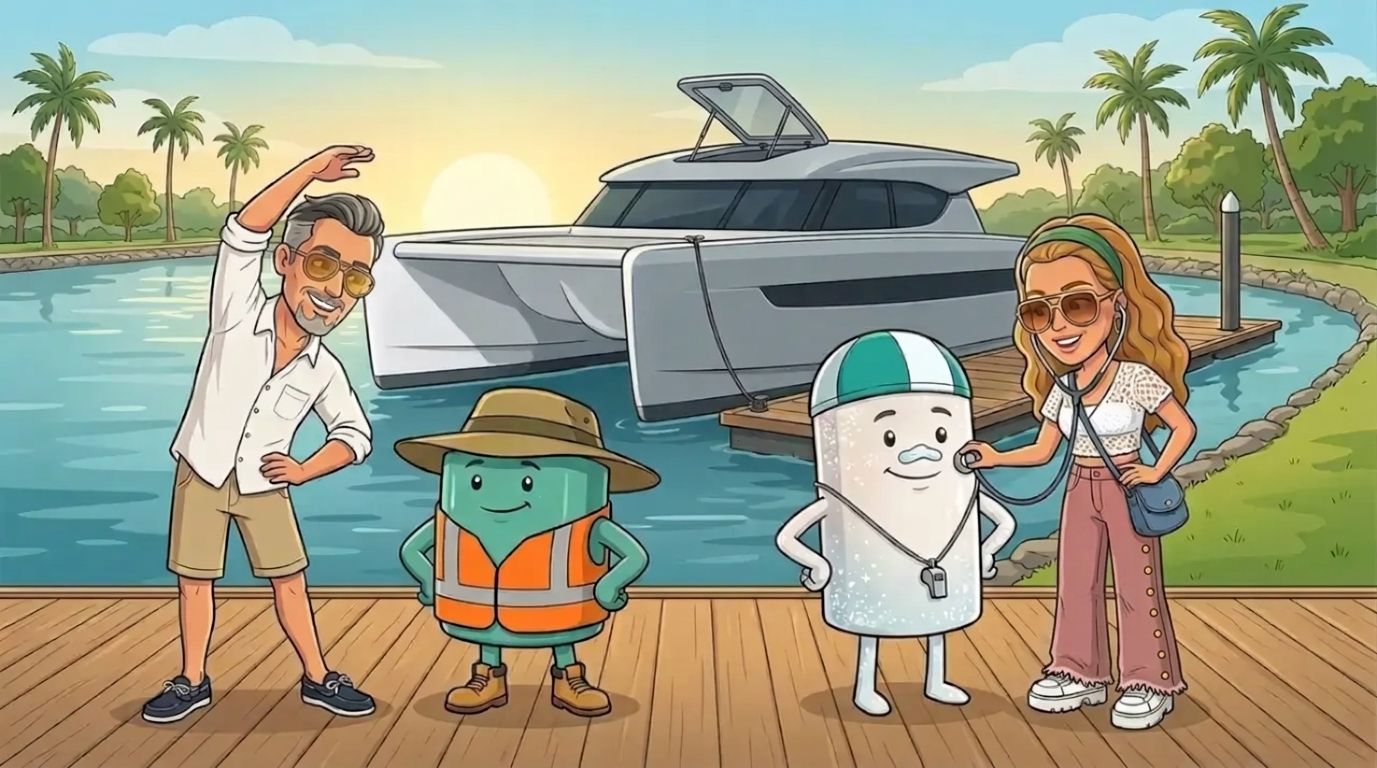
Battery care is like looking after your body. Top priority.
Whatever chemistry you end up with, lithium iron phosphate today or sodium-ion tomorrow, the basics don't change. This is general advice, consistent with the IEA and IRENA sources below.
- Keep the battery within its temperature limits, and check its spec sheet before charging below freezing.
- Use a quality battery management system and a charger set up for that exact chemistry.
- Follow the maker's charging and storage advice.
- Have batteries installed and checked by a qualified person.
Why we care
At Cat Cruisers, we build boats that double as caravans: boat by day, caravan by night. When your boat is also where you sleep, it pays to understand the battery technology on the horizon, with the honest trade-offs as well as the headlines. That's why, for us, battery care is top priority.
Sources
- International Energy Agency: Sodium-ion battery momentum grows, but challenges remain (Feb 2026)
- International Energy Agency: Global EV Outlook 2026, Electric vehicle batteries
- IRENA: Sodium-ion batteries, a technology brief (Nov 2025)
- Faraday Institution: Faraday Insights 11, Sodium-ion batteries
- University of Sheffield: zero-volt operation of commercial sodium-ion cells
- Desai et al. (2022), Energy Storage Materials: zero-volt storage of sodium-ion cells
- Karlsruhe Institute of Technology: Cell design and chemistry of commercial sodium-ion battery cells
- ARENA: Smart Sodium Storage System for Renewable Energy Storage (University of Wollongong)
- CSIRO: battery research