
Solar Panels on Boats: Can You Run a Catamaran on Sunshine?
By Jason Rieck
Co-Founder & Lead Designer, Cat Cruisers
Running a boat on sunshine sounds almost too good to be true. Free energy from the sky, no fuel, no noise. The honest answer is that solar is a genuinely useful helper, not magic. It stretches a sunny day on the water, but it doesn't replace charging. Here's how it works, in plain English, and what the jargon means.
What a solar panel actually does
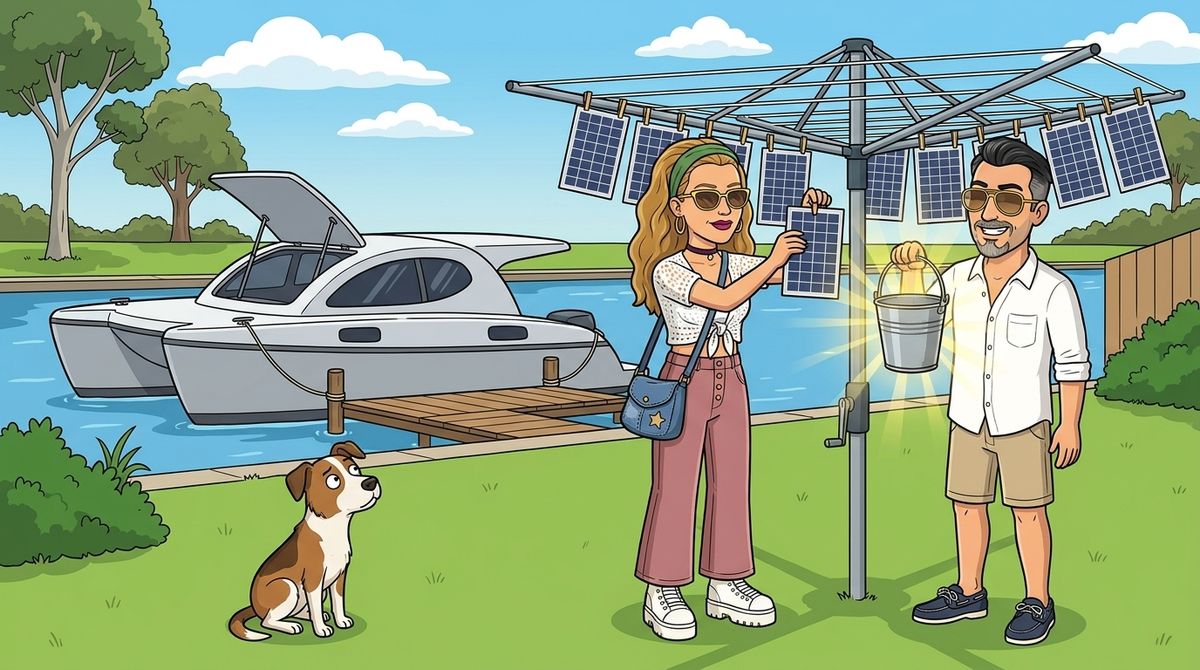
A solar panel turns sunlight into electricity. Think of it as a clothesline for sunshine: it hangs out in the open and catches what falls on it. The more panel area you have, and the stronger the sun, the more you catch.
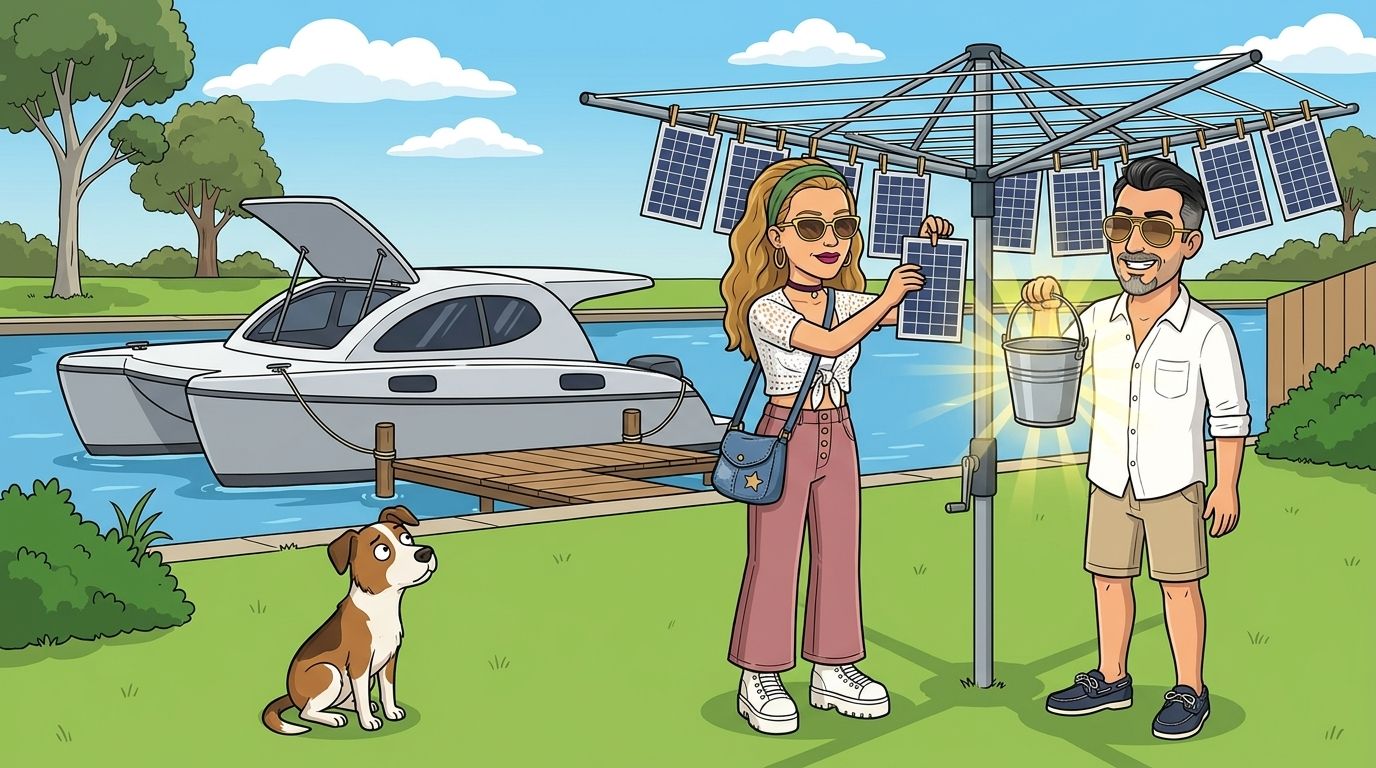
Panels are rated in watts. That rating is what the panel produces in strong, ideal sunshine, a bit like a car's top speed. You won't see it all day, every day.
Efficiency is how much of the sunlight hitting a panel gets turned into electricity. Even good panels only turn a fraction of it into power. The rest is lost as heat or bounces off.
How much sun do we get?
The amount of sunshine falling on a spot is measured in kilowatt-hours per square metre per day. It's like a rain gauge, except it measures sunshine. Australia does well. Coastal north Queensland averages around 5.5 kWh per square metre per day across the year, and the Gold Coast isn't far behind. Southern states generally get less, especially in winter.

Why you never get the full rating
Real life always takes a bite out of the ideal number. This is general, well-established solar know-how:
- Angle. Panels lying flat on a roof don't face the sun perfectly all day.
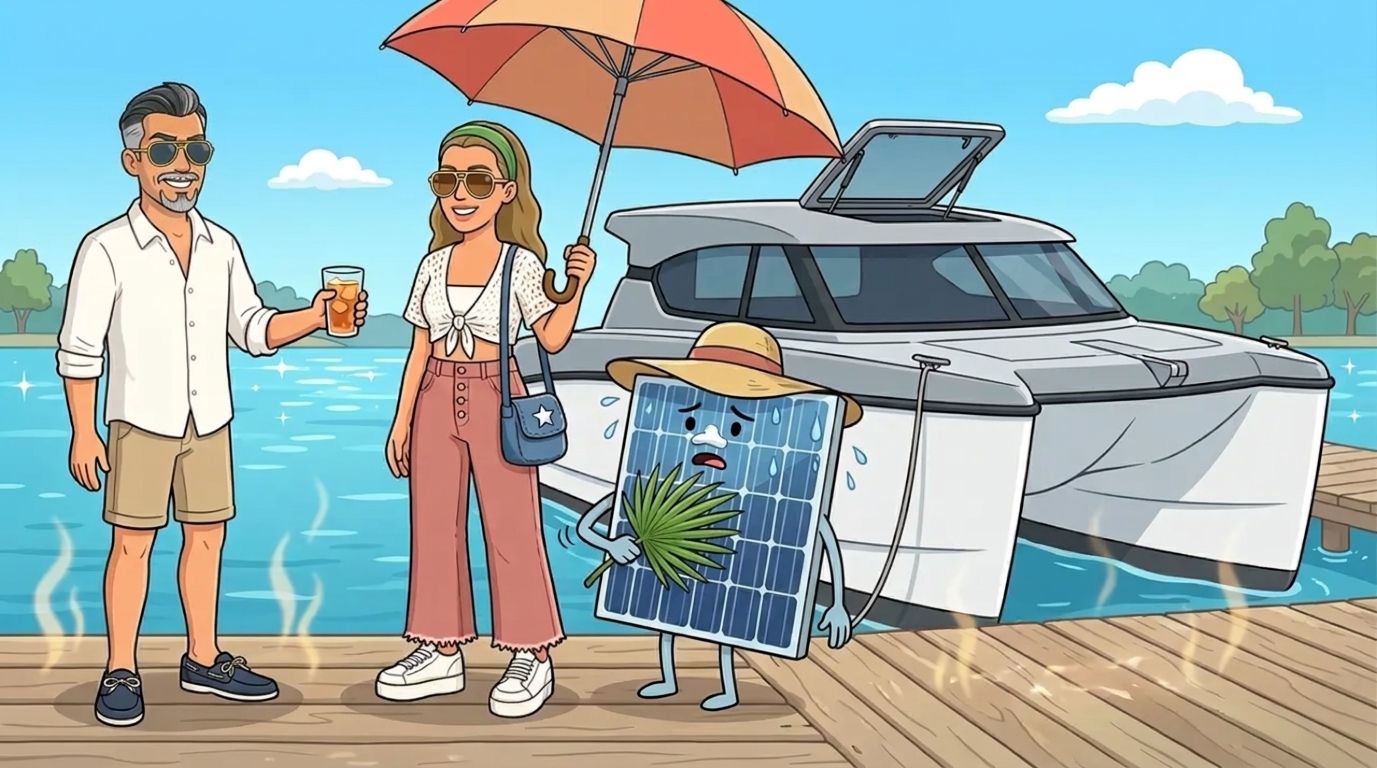
- Heat. Panels actually work less efficiently when they get very hot.
- Shade. A mast, an antenna or even a seagull can shade part of a panel and cut its output.
- Weather and season. Cloud, and the low winter sun, both mean less power.
- Losses in the system. Some energy is lost along the way to the battery.

Why catamarans suit solar
A catamaran's two hulls give it a wide, flat roof. That's a great spot for panels, like a big flat shed roof catching rainwater into a tank. The more flat roof you have, the more panels fit.

What solar can and can't do
Here's the honest bit. Solar can top up the battery while you're anchored for lunch or cruising gently on a sunny day. On many boats it also helps with things like lights and the fridge at anchor. Every kilowatt-hour you collect from the sun is one you didn't need from a power point.
What solar can't do is run a boat without limits. Energy in has to keep up with energy out, and at normal cruising speeds a boat uses power faster than the roof can collect it. Cloudy days, winter sun and shade all cut the harvest further. Think of it like a phone on a slow charger at lunchtime: the battery creeps up, which is handy, but it's not a full recharge.
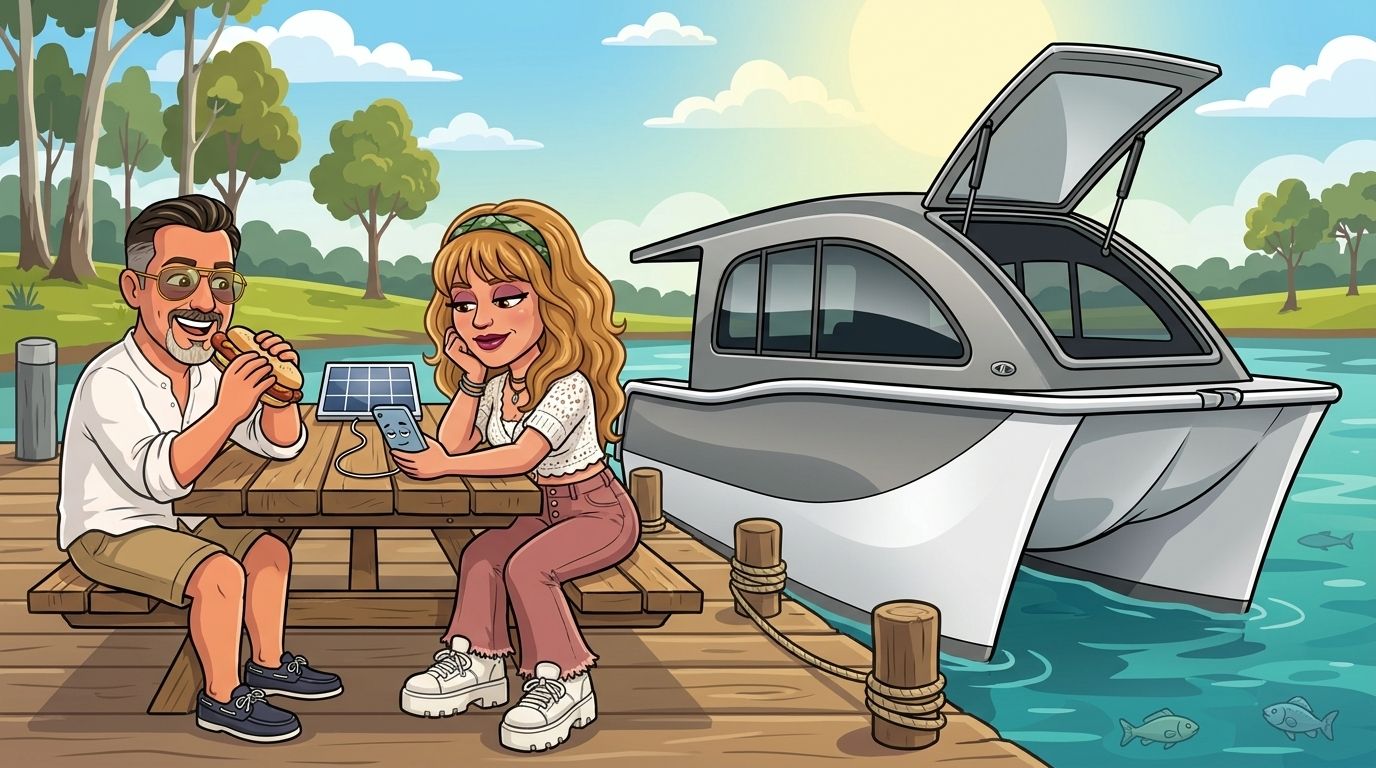
General advice: plan your day on the battery you have, and treat solar as a bonus that stretches a sunny day, not something to rely on.
Australia's natural advantage
Our boating season lines up nicely with the sunniest time of year. Spring and summer bring long days and strong sun, exactly when most people are out on the water. That makes solar a natural partner for electric boating here.
Solar on a Cat Cruiser
Cat Cruisers carry 5,000 W of solar on the roof. It helps stretch a sunny day. The boats run on a 60 kWh drive battery. There's a separate house battery for life on board, and a fast charge takes about an hour. How much the solar adds on any given day depends on the weather, the season and where you are.
Curious how solar fits into life on board? Have a chat with the team at catcruisers.com.au/contact.