
Sydney Just Had Its Busiest Rescue September on Record. Most of the Callouts Were Preventable.
Last month, volunteer crews across New South Wales performed 298 search and rescue missions, safely returning 659 people to shore. That number alone would make September a busy month. But buried in the data is a statistic every boat buyer should sit with: across Greater Sydney — where demand hit an all-time high — more than half of those responses involved preventable problems. Engine failure. Running out of fuel. Flat batteries. [1]
Marine Rescue NSW Commissioner Todd Andrews didn't sugar-coat it: "That is a huge amount of work for our volunteers across Sydney Harbour and surrounding waters, with more than half of those responses involving preventable issues such as engine failure, running out of fuel or flat batteries. It is vitally important that all boaters put the effort into preparation before heading out." [1]
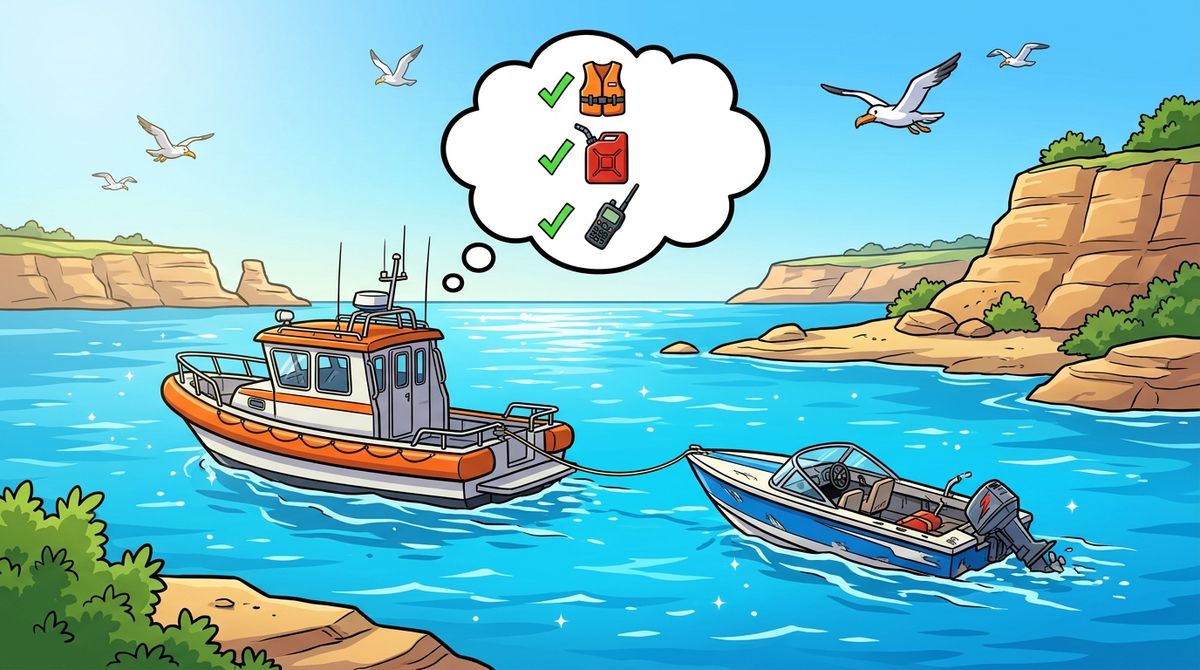
His prescription is short: "Make sure your vessel is in good working order, carry enough fresh fuel, always wear a lifejacket and Log On with Marine Rescue NSW, every trip, every time." [1]
Here's what the September numbers actually tell us — and how to use them whether you've owned a boat for twenty years or are still deciding which one to buy.
What the September Data Shows
Greater Sydney's seven units — Hawkesbury, Cottage Point, Broken Bay, the Sydney State Communications Centre, Port Jackson, Middle Harbour and Botany Port Hacking — recorded their busiest September on record with 156 search and rescue missions, including 23 emergency responses that returned 353 people safely to shore. [1]
The five-year trend line is the part worth paying attention to:
- 2022: 93 missions 2023: 137 missions 2024: 109 missions 2025: 141 missions 2026: 156 missions [1]
Demand isn't just high — it's climbing year on year. Since January, Greater Sydney crews have performed more than 1,150 missions and returned almost 2,750 people to shore. [1]
The busiest single unit in the state wasn't on the harbour. Marine Rescue Botany Port Hacking completed 43 missions — the first time that unit has topped the state tally this year. Lake Macquarie, consistently among the most in-demand units, recorded 35. [1]
The good news inside the numbers
Not every line in the data moved the wrong way. Boaters around Lake Macquarie logged on with rescue radio operators 1,449 times over the past three months — up from 860 in the same period last year — something Commissioner Andrews attributed to heeding safety advice and weather warnings. "Anytime we see a reduction in missions, it is a huge win for boating safety and the incredible work our volunteers do," he said. [1]
Statewide, volunteer radio operators managed 16,700 calls in September, responded to 10 MAYDAYs, and kept watch over almost 22,000 people aboard vessels that had logged on. All of it done by around 3,400 trained volunteers who donate their time. [1]
Why "Preventable" Matters More Than the Headline Number
Break down what the preventable callouts actually are and a pattern emerges. These aren't dramatic, unforeseeable events:
- Engine failure — a maintenance issue, usually visible in advance. Running out of fuel — a planning issue, entirely avoidable. Flat batteries — an equipment issue, detectable before you leave the ramp.
None of these are bad luck. They're the three things a thorough pre-purchase inspection and a proper pre-launch routine are designed to catch. Which is why the September data is arguably more useful to a buyer than to a skipper.
What this means if you're buying a boat
Every one of those three failure modes is something you can test before money changes hands:
- Engine failure: Insist on a sea trial, not just a marina start-up. Engines that idle fine in a pen can still struggle under load, overheat at cruising speed, or cough on a cold start after a week on the trailer. Watch the gauges the whole run, and ask for service records. Fuel range: Ask the seller what the vessel genuinely uses per hour at cruising speed — not the brochure figure — and check the fuel gauge and sender actually agree with reality. A faulty sender has sent more than one boat home on a tow line. Batteries: Load-test the house and starting batteries. Ask how old they are. A battery that's fine on a charger in the seller's driveway can be a different story after a long day on the anchor with the fridge and sounder running.
If a seller won't let you do these checks, that's not a boat problem — that's your answer about the seller.
The Pre-Launch Checklist the Data Points To
Commissioner Andrews' four-point prescription maps directly onto what the busiest units keep seeing on the water. Here's the version worth laminating for your glovebox:
- Check the vessel the night before, not on the ramp. Battery voltage, fuel (full tank beats "should be enough"), oil, coolant, bilge, trailer bearings and tyre pressures. Ramps are where flat batteries announce themselves — usually with an audience. File a trip plan — and actually log on. Logging On takes about 60 seconds via the free Marine Rescue app or VHF Channel 16, and it means someone knows where to look if you go overdue. It meant volunteers were watching over nearly 22,000 people in September alone. [1] Carry the boring spares. A spare battery or jumper pack, a spare fuel filter, basic tools, and more drinking water than you think you need. Most "emergencies" at sea are inconvenience plus no backup plan. Check the forecast twice. Once the night before, once before you leave home. Conditions on the Broadwater or the bay can turn a good day into a long one faster than any engine failure.
For trailer boat owners, one more
The ramp adds a failure mode most checklists miss: the trailer itself. Bearings, tyres, winch strap and lights all live a hard life in salt water. A trailer failure doesn't just cost you a day — it can turn a launch or retrieval into the kind of situation that ends with a phone call to a volunteer crew.
The Bigger Picture for Buyers
The five-year Sydney trend — 93 to 156 missions — is tracking the same direction as the national fleet. More boats on the water, more trips, more callouts. The Bureau of Meteorology's marine forecasts and volunteer rescue services are doing their part; the numbers suggest owners could be doing more of theirs.
None of this is an argument against getting on the water. It's the opposite. The boaters having the best time out there are overwhelmingly the ones whose batteries start, whose fuel math works, and whose log-on takes sixty seconds. Preparation is the difference between a story you tell at the barbecue and a story a volunteer crew tells at theirs.
The September data hands every buyer a free screening tool: when you inspect a vessel, test the three things that generate more than half the rescue callouts. A seller with nothing to hide will happily let you.
Cat Cruisers builds its amphibious vessels on the Gold Coast with sea trials as part of the buying process — the sea trial being the one check that surfaces engine, fuel and battery truth before you commit. For buyers weighing up any vessel, new or used, that hour on the water is the best money you'll never spend twice.
Sources
1. Marine Business News, "Marine Rescue NSW completes 298 missions in September as demand across Greater Sydney hits new high", 15 October 2026. https://www.marinebusinessnews.com.au/2026/10/marine-rescue-nsw-completes-298-missions-in-september-as-demand-across-greater-sydney-hits-new-high/
2. Marine Rescue NSW, official website and Log On app information, 2026. https://www.marinerescuensw.com.au/